
What is a Scalping Strategy? Everything You Need to Know
Updated: 3 Nov 2025 • 1:35 pm
Posted by:

Click Here – Get Free Investment Predictions
The scalping strategy is a trading approach that focuses on making small, quick profits from minute price changes and reselling quickly. Traders who use this strategy aim to profit from many small trades throughout the day. The Scalping Strategy is popular among traders who prefer a high volume of trades for small gains, rather than waiting for significant market moves. Scalp traders don’t hold their position for more than a few minutes. They prefer to trade in quick succession when an opportunity arises and prefer making small profits rather than waiting for a big trade opportunity to emerge.
Scalp trading works on the principle of limiting market exposure by opening and closing positions quickly. While scalping, a trader will execute between 10 and 100 small trades per day. Learning about scalp trading can help you determine whether it aligns with your trading style. For this reason, we will discuss the scalping strategies that are effective.
What is Scalp Trading?
Scalp trading, also known as scalping, is a trading style that profits from small price changes, accumulating profits over time. Scalpers, i.e., traders who scalp, trade frequently within minutes and seconds. A scalp trader needs a strict exit policy because a single significant loss could wipe out all the small profits from other deals. This approach requires quick decision-making, rigorous risk management, and constant market monitoring to generate earnings from a large number of small scalp trades. A scalping strategy plays a crucial role in scalp trading, enabling investors to generate quick profits.
How Does Scalp Trading Work?

Scalpers believe it is easier to make small deals and less risky from a market volatility perspective. They make small profits before the opportunity grabs. At the same time, scalp trading lies on the other end of the spectrum, where traders hold onto their positions overnight, sometimes even for weeks and months, waiting for a larger profit to emerge. The scalping strategy is a basis for the performance of the scalping trading, as it helps them to generate quick profits in a small amount of time.
Scalping trading works on the market on three principles:
- Lower exposure limit risks: A brief exposure to the market reduces the risk of encountering an adverse condition. Scalping strategy in the stock market also minimises the risk of adverse market conditions. The scalping strategy offers a concise overview of how to mitigate long-term risks.
- Small moves are easier to achieve: For a larger profit, the stock price must move significantly, which also requires a greater imbalance between supply and demand. It helps to provide scalper trading tips for beginners. The scalping strategy provides an exotic overview for investing in trading.
- Small moves happen frequently: Even when a market is apparently quiet, there are smaller price movements that scalpers target to exploit. Investors should also understand how scalpers generate profits and how this knowledge is applied in scalping strategies.
What is the Scalping Strategy? Why is it Important?
The scalping strategy is a trading approach that focuses on making small, quick profits from minute price changes and reselling quickly. Generally, scalping as a trading strategy has its challenges and risks. It requires intense focus and discipline, as scalp strategies involve entering and exiting positions quickly and efficiently. A successful scalper can make multiple trades in a day to achieve a predetermined profit target. Scalp strategy can be mentally taxing and requires a trader to stay calm under pressure. Additionally, the approach can lead to higher trading costs due to its high trade frequency, and market noise can significantly impact profitability.
Key Reasons of importance for the scalping strategy:
- Limited Risk Exposure: Since scalp trades are short-term, traders are exposed to less risk compared to a longer-term strategy. This minimises potential losses if the market turns unfavourable and is also beneficial for a scalping trading strategy.
- Frequent trading opportunities: A Scalping strategy allows traders to take advantage of frequent, small-scale price movements, providing various opportunities to generate profits.
- Liquidity Advantage: Scalp trading works in liquid markets with low spreads, enabling traders to enter and exit positions quickly and efficiently. Liquidity is also beneficial for scalping strategies, providing a long-term advantage in the short run.
- Timeframe flexibility: The Scalping strategy can be adapted to various timeframes, ranging from intraday to intra-minute, allowing traders to tailor their strategy to their specific needs and preferences.
Types of Scalping Strategies
The scalping strategy encompasses a variety of ways to capitalise on frequent price movements over a short period. Each approach offers different avenues for utilising market conditions to achieve profits. Here are the basic techniques which is used in scalping strategies:
- Market Making: This involves placing buy and sell orders on both sides of the order book, aiming to earn a profit across a wide range of stocks. When prices fluctuate, the primary goal is to fulfil both orders, enabling the scalper to earn profits from a wide range of stocks.
- Breakout Scalping: This involves trading on market momentum after a price breaks out of a key level, such as a support or resistance zone. A breakout happens when the price moves beyond the identified zone, confirmed with increased volume.
- Momentum Scalping: With momentum scalping, the goal is to enter trades in the direction of already confirmed strong price movements, which may be driven by news, sentiment, or technical indicators such as moving averages, the Relative Strength Index (RSI), and the Moving Average Convergence Divergence (MACD).
- Mean Reversion Scalping: Here, profits are earned from volatility that follows economic announcements, earnings reports, or other significant events. It is the most essential type of scalping trading strategy. Scalpers use indicators such as Bollinger Bands and the RSI to identify overbought or oversold conditions.
- News-Based Scalping: In this strategy, profit is generated from volatility that follows economic announcements, earnings reports, or other significant events.
- Market Depth Scalping: This strategy involves utilising Level 2 market data to identify where buyers and sellers are waiting, and then trading in their direction when the price reaches the level they are targeting.
Download the Univest iOS App or the Univest Android App to get daily stock recommendations and insightful research pieces!
Scalping Strategy in the Financial Markets
- Scalping in the stock market: Heavily traded equities are much easier to buy and sell at the prices that have been set as a target. Typically, this is a relatively risky way to make money in the stock market. However, some investors use scalping to manage risk.
- Scalping Strategy in the Forex Market: Trading currencies from countries that have a solid reputation can be a bad idea, regardless of how far along the scalping journey one is. It may be wise to stick to what you know; scalping can be well-suited to the foreign exchange market.
- Scalping Strategy in the Future and Options Market: Futures and options are derivative instruments that can be scalped like any other security. A futures contract commits the buyer to purchase an asset at a future date. An option gives the purchaser the right to buy or sell a security at a predetermined price at any time during the contract.
Involved in the Scalping Strategy: Step-By-Step Guide
The basis of this strategy is making multiple trades over a short period to profit from minor price fluctuations. Traders use this approach because it can lead to frequent, smaller gains that add up over time. However, it is essential to have a strict exit strategy because a single significant loss can remove many small profits.
Imagine you are scalping shares of a company with a current price of ₹500. You notice that the price fluctuates by ₹1 to ₹2 several times during the day.
Step-by-Step
- Buy: You buy 100 shares at ₹500 each. Your total investment is ₹50,000.
- Price Movement: The stock price rises to ₹501.
- Sell: You sell the 100 shares at ₹501 each. Your total sale amount is ₹50,100.
Tips for Using the Scalping Strategy
If you are new to scalping, here are some tips to help you start the scalping strategy in the stock market:
- Order Execution Efficiency: Execute your trade execution properly by avoiding delays or mistakes through reliable trading platforms and tools. It makes it beneficial for trading strategies in scalping for investors who are willing to engage in scalping trades.
- Managing Trade Costs: Be mindful of transaction costs associated with frequent trades, and opt for brokers with low commissions. It is also helpful in the scalping strategy as a long-term tool.
- Identifying Market Trends: Investors must analyse market trends to enhance their ability to make profitable long-term trades, and the scalping strategy has optimised these trends for investors.
- Applying Technical Analysis: Utilise fundamental technical analysis and short-term trading indicators to refine your trading decisions. It aids in the scalping strategy by facilitating technical analysis for a more effective purpose.
- Ensuring Market Liquidity: Focus on high trading volume and liquidity to facilitate easy trade execution and quick entry/exit.
- Maintaining Trading Discipline: You strictly adhered to your trading strategy and avoided holding positions overnight to stay aligned with short-term opportunities. It is the most essential part for tips involving the scalping strategy and for other purposes.
Sign up on Univest to get more investment predictions and access to exclusive screeners! Click here.
Scalping Vs Intra-Day Trading
| Basis of Comparison | Scalping | Intraday |
| Definition | Scalping involves making multiple small trades throughout the day to capture small price movements. | Intraday trading involves buying and selling securities on the same day to profit from larger price fluctuations. |
| Trade Duration | Very short-term, usually a few seconds to a few minutes per trade. | Short-term trades can last from a few minutes to several hours and are typically closed before the market closes. |
| Number of Trades per day | Very high- dozens to hundreds of trades. | Moderate – typically 1 to 5 trades a day. |
| Profit Per Trade | Very small (a few paise or points), accumulated over many trades. | Larger profit potential per trading. |
| Risk Level | Low risk per trade, but high cumulative risk due to the large volume of trades. | Moderate to high risks depending on trade size and market volatility. |
| Capital Requirements | Requires high capital and margin due to frequent traders. | It can start with moderate capitalisation depending on the strategy. |
| Focus | Focuses on liquidity and volatility for quick entry and exit. | Focuses on trend analysis and technical indicators for directional moves. |
How to Start Scalp Trading with Univest?
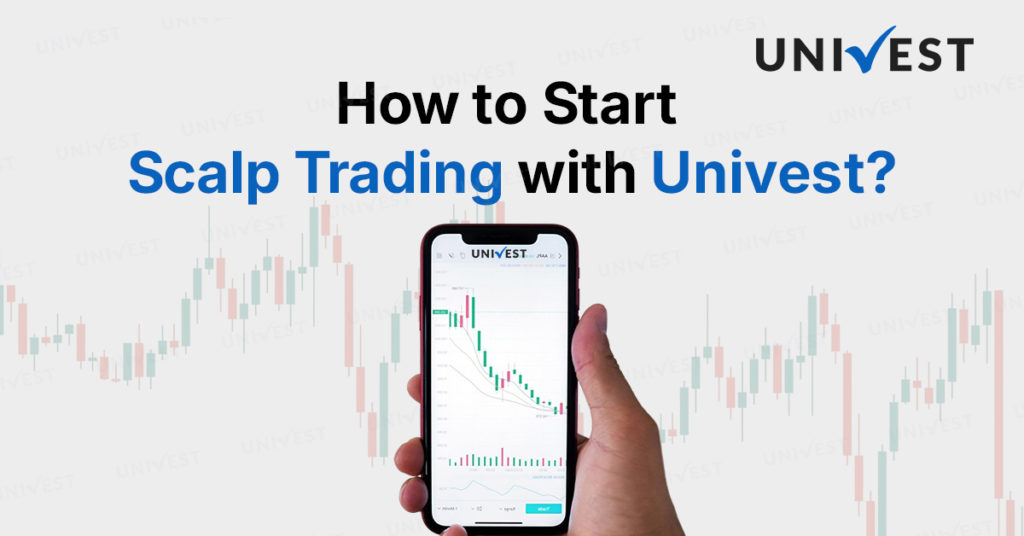
You can scalp trade by following the simple steps below: Firstly, you need a Demat Account.
- Open a Demat account with Univest for free and get started with trading.
- Log in to the Demat Account and ensure there are enough funds available for trading.
- Explore the features and tools on the Univest platform, including real-time charts and technical indicators.
- Develop a scalp trading strategy that incorporates short-term charts, technical analysis, and effective risk management.
- Execute the trade. Keep a close eye on your trades and adjust as necessary. Scalping requires constant monitoring due to its short-term nature.
What are the Risks and Challenges of the Scalp Strategy?
Tap to Access Best Research Pieces
These risks make scalping a challenging strategy, requiring discipline, experience and careful risk management.
- Market Volatility: Sudden price swings can lead to unexpected losses, as scalping relies on small, precise movements. This makes it more challenging to make the scalping strategy and to implement it.
- High Transaction Costs: Frequent buying and selling incur significant brokerage fees and commissions, which can reduce long-term profits, so investors must consider this factor when developing a scalping strategy.
- Execution Risks: Delays in order execution or slippage can impact the profitability of rapid trades, which investors should consider before implementing a scalping strategy.
- Emotional Stress: The fast-paced nature of scalping can cause emotional stress, leading to impulsive decisions and mistakes that play a crucial role in the scalping strategy.
- Dependency on Technology: Successful scalping requires reliable trading platforms, fast internet, and real-time data; technical failures can result in significant losses, so traders must consider this factor before adopting the scalping strategy.
What are the popular scalping indicators and strategies?
Scalping strategy relies on careful technical analysis, a practice that involves identifying price trends and patterns to select securities. Here are five popular strategies:
- Stochastic Oscillator Strategy: This momentum indicator aims to identify securities that are overbought or oversold by comparing the most recent closing price to a stock’s highs and lows over a prescribed period. There is no guarantee that an investment will return to a more reasonable price, and it is considered one of the best scalping strategies among all trading strategies.
- Moving Average Strategy: Moving averages can provide scalpers with a meaningful data set. For example, a five-day Simple Moving Average (SMA) calculates the average of the five most recent daily closing prices by adding them together and then dividing by five to create a new average each day. It is also the best tool for a scalping strategy.
- Parabolic Stop and Reverse (SAR) indicator strategy: This indicator spots possible reversal points in a price trend. The indicator plots dotted lines on a stock chart to help spot these shifts. When the lines reverse, it can help indicate which stop-loss order to place on a trade, and it is considered one of the best scalping strategies.
- Relative Strength Index (RSI) strategy: This is a momentum indicator that measures the speed and magnitude of recent price movements for a given movements for a given security. It can help traders determine whether a security is overbought or oversold, making it a suitable scalping strategy.
- Moving Average Convergence Divergence (MACD) indicator strategy: This measures the difference between a security’s exponential moving averages over different time periods. These comparisons can help identify an upcoming change to a security’s price trend.
Scalping Vs Swing Trading
| Feature | Scalp Trading | Swing Trading |
| Time Frame | Very short-term, from seconds to minutes | Short to medium-term, from a few days to weeks |
| Number of Trades | High frequency, multiple trades per day | Fewer trades, focusing on capturing larger price moves |
| Profit per Trade | Small profits per trade | Larger profits per trade |
| Market Exposure | Low, minimal overnight risks | Higher positions held overnight or longer |
| Analysis Method | Focuses on technical analysis, charts and intraday price action | Use a combination of technical and fundamental analysis. |
| Stress Level | High, requires constant monitoring. | Moderate, less intense than scalping. |
| Transaction Costs | Higher due to frequent trades. | Lower as trades are less frequent. |
Conclusion
Scalping can be a successful strategy for traders who prefer making quick decisions and executing multiple trades throughout the day. This method involves making numerous small trades to earn small profits from slight price changes. Unlike other strategies that wait for big market moves, scalping focuses on these quick, small gains. To succeed with scalping, you must understand how it works and have the right tools, such as fast trading platforms. It’s not for everyone; it requires constant attention and quick thinking. However, it can be a profitable way to trade for those who can keep up with the pace. Execute your trades properly by avoiding delays and mistakes with reliable trading platforms and tools. It makes it beneficial for trading strategies in scalping for investors who are willing to engage in scalping trades.
FAQs
What is a scalping strategy?
Ans. The scalping strategy is a trading approach that focuses on making small, quick profits from minute price changes and reselling quickly. Traders who use this strategy aim to profit from many small trades throughout the day.
What tools and platforms are essential for scalping?
Ans. Effective scalping requires reliable trading platforms with real-time data and fast order execution capabilities. Essential tools include direct-access trading platforms, Level 2 quotes for market depth, and charting software for short-term time frames. A high-speed internet connection is also crucial to avoid delays.
How much capital is needed for a scalping strategy?
Ans. The capital required for a scalping strategy can vary depending on the trading style and the market being traded. Generally, you need enough capital to cover the cost of multiple trades, including transaction fees. A larger capital base allows for more flexibility and the ability to absorb small losses while aiming for small gains.
How do I manage risk while scalping?
Ans. Managing risks in scalping involves setting strict stop-loss orders to limit potential losses and exiting trades quickly if they move against you. It’s also essential to use a well-defined trading plan and adhere to it, avoiding emotional decisions that can lead to excessive losses.
What are the five popular strategies in scalper trading?
Ans. Stochastic Oscillator Strategy, Moving Average Strategy, Parabolic Stop and Reverse (SAR) indicator strategy, Relative Strength Index (RSI) strategy, and Moving Average Convergence Divergence (MACD) indicator strategy.
What are the tips involved in the scalper strategy?
Ans. Execute your trades properly by avoiding delays or mistakes with reliable trading platforms and tools. It makes it beneficial for trading strategies in scalping for investors who are willing to engage in scalping trades. Investors must analyse market trends to enhance their ability to make profitable long-term trades, and the scalping strategy has optimised these trends for investors.
Also Explore
| Best Stocks | Multibagger Stocks | Penny Stocks | Fundamentally Strong Stocks | Sector-Wise Stocks | PSU /Government Stocks |
| For the Next 10 Years | For the Next 5 Years | Solar Penny Stocks | On BSE | Solar Energy Sector | PSU Stocks List |
| Long Term | Below 100 Rs | Top 5 Penny Stocks | For Long-Term | Hospitality Sector | PSU Stocks in 2025 |
| Best Bike Stocks | For 2025 | Best Penny Stocks in India | Penny Shares | Hotel Sector | Government Stocks in 2024 |
| Best Liquor Stocks | High-Growth Stocks | For 2025 | Agriculture Sector | Government Stocks List | |
| Best Railway Stocks | Under 500 | Penny Stocks | Pharma Sector | Government Stocks in 2025 | |
| Best Auto Stocks | For 2026 | Oil and Gas Sector |
Univest Screeners
Recent Articles

Nifty 50 Analysis: Technical and Derivatives Breakdown Ahead of Tuesday’s Weekly Expiry
10 July 2026

Weekly Update- 10th July 2026
10 July 2026

Global Vectra Helicorp Q1 Results FY27: Date, Revenue Estimates, Key Catalysts and Share Price Target
10 July 2026

Integra Essentia Q1 Results FY27: Date, Revenue Estimates, Key Catalysts and Share Price Target
10 July 2026
Note: This blog is for information purpose only. Investments and trading are subject to market risks, read all scheme related documents carefully.
Reviews






Recent Posts
Nifty 50 Analysis: Technical and Derivatives Breakdown Ahead of Tuesday’s Weekly Expiry
Weekly Update- 10th July 2026
Global Vectra Helicorp Q1 Results FY27: Date, Revenue Estimates, Key Catalysts and Share Price Target
Integra Essentia Q1 Results FY27: Date, Revenue Estimates, Key Catalysts and Share Price Target
Urban Company Share Price Falls 3.24 Percent on 10 July 2026 Despite Broader Market Rally
Popular this week
Nifty 50 Analysis: Technical and Derivatives Breakdown Ahead of Tuesday’s Weekly Expiry
Weekly Update- 10th July 2026
Global Vectra Helicorp Q1 Results FY27: Date, Revenue Estimates, Key Catalysts and Share Price Target
Integra Essentia Q1 Results FY27: Date, Revenue Estimates, Key Catalysts and Share Price Target
Urban Company Share Price Falls 3.24 Percent on 10 July 2026 Despite Broader Market Rally

Uniresearch Global Pvt Ltd
Research Analyst
SEBI Registration Number — INH000013776
Uniresearch is a subsidiary of Univest Communication Technologies Private Limited
Company Address: Registered Address: Ground Floor, Unitech Commercial Tower 2, Block B, Greenwood City, Unit 1-3, Sector 45, Gurugram, Haryana 122003
Write to us : support@univest.in, compliance@univest.in
Verify on SEBI registry →RESEARCH ANALYST
Get SEBI Registered
advice on the stocks
trending today.
Get 3 FREE Trade Ideas

for Startups Accelerator 2024

Trusted by 1Cr Indians

Awarded No.1 by Economic Times