
Stock Market Advisory vs DIY Investing: Which Is Better for Retail Investors in India?
Stock market advisory: SEBI-registered RA (INH) + IA (INA). DIY: self-directed research. Full comparison: cost, time, discipline, suitability. Univest SEBI RA INH000013776.
Updated: 21 Aug 2026 • 2:35 pm
Posted by:

Quick Answer
Stock market advisory and DIY investing are the two primary approaches for retail investors in India. Advisory involves using SEBI-registered research analysts or investment advisers for stock recommendations and portfolio guidance, while DIY means doing your own research and making all investment decisions independently. Advisory is better suited for beginners and busy professionals; DIY works best for experienced investors with sector knowledge and research time. A hybrid approach — using advisory for ideas while building your own skills — is increasingly popular among India's retail investors.
What Is Stock Market Advisory and How Does It Work?
A stock market advisory service provides individual investors with research-backed stock recommendations, portfolio guidance, and market analysis from SEBI-registered analysts. In India, stock market advisory services are regulated by SEBI under the Research Analyst (RA) and Investment Adviser (IA) frameworks. SEBI-registered research analysts publish stock recommendations with defined entry prices, targets, and stop-losses. SEBI-registered investment advisers provide personalised portfolio recommendations based on an investor's goals, risk profile, and financial situation.
Univest, for example, is SEBI-registered as a Research Analyst (INH000013776) and Investment Adviser (INA000017639), providing equity recommendations, F&O strategies, and portfolio advisory services within the regulatory framework. All recommendations come with disclosures, research backing, and defined risk parameters.
Click Here – Get Free Investment Predictions
What Is DIY Investing in the Stock Market?
DIY (Do-It-Yourself) investing means selecting and managing stocks or funds independently, without relying on external advisory. DIY investors do their own research, set their own asset allocation, and make all buy and sell decisions. With the growth of discount brokers, zero-brokerage platforms, and free financial data on the internet, DIY investing has become increasingly accessible to retail investors in India.
Common DIY approaches include: value investing (buying undervalued stocks based on fundamental analysis), growth investing (targeting companies with high revenue and earnings growth), index investing (buying Nifty 50 ETFs or index funds), or technical trading (using charts, patterns, and indicators to time entries and exits).
Stock Market Advisory vs DIY: Head-to-Head Comparison
| Parameter | Stock Market Advisory | DIY Investing |
|---|---|---|
| Research depth | Professional research with data, models | Depends on investor's time and skill |
| Time required | Low — recommendations are ready-to-use | High — research, monitoring, decisions |
| Cost | Subscription fee (regulated by SEBI) | Zero advisory cost; only brokerage |
| Emotional discipline | External anchor reduces panic decisions | Full self-discipline required |
| Personalisation | IA services can personalise to goals | Fully personalised by design |
| Regulatory protection | SEBI oversight; grievance redressal | Self-directed; no advisory oversight |
| Best suited for | Busy professionals; new investors | Experienced investors; market enthusiasts |
| Learning curve | Low to start | Steep for beginners |
| Accountability | SEBI-registered analyst is accountable | Self-accountable only |
Start Your Investment Journey with Univest Research — SEBI Registered RA and IA
When Is Stock Market Advisory Better for Retail Investors?
When You Are a Busy Professional
Stock market advisory is most valuable when you have capital to invest but limited time for research. A SEBI-registered research analyst can deliver screened stock picks with defined risk parameters, saving you the 5-10 hours per week that thorough DIY research typically demands. If you are a professional whose primary income comes from your career rather than investing, the time cost of DIY research often outweighs the advisory fee.
When You Are a Beginner
New investors who lack experience in reading financial statements, understanding sector dynamics, or managing portfolio risk benefit significantly from stock market advisory. A structured advisory service provides discipline: defined entry points, price targets, and stop-losses replace emotional decision-making. For a beginner, an advisory subscription can also serve as a financial education tool — you learn by observing professional reasoning behind each recommendation.
When Markets Are Volatile
During sharp market corrections or high-volatility environments — like the March 2026 lows that saw the Nifty hit 21,000 — many retail investors make poor decisions: panic selling at lows, buying at peaks, or abandoning their strategy entirely. A stock market advisory provides a steady, research-backed anchor that helps investors stay disciplined even when sentiment is extreme.
When Is DIY Investing Better for Retail Investors?
When You Have Deep Sector Knowledge
If you work in an industry and understand it deeply — a pharma professional investing in pharmaceutical companies, an IT executive tracking technology stocks — your on-the-ground knowledge gives you an information edge that generic advisory cannot replicate. In such cases, DIY investing leverages your professional expertise into investment alpha.
When You Want Full Control and Flexibility
DIY investors can act immediately on news, adjust position sizes dynamically, concentrate in high-conviction ideas, or use complex options strategies without the constraints of a packaged advisory service. For experienced traders and investors who want complete tactical flexibility, DIY is the natural choice.
When You Have the Time and Appetite to Learn
Investing is a skill that compounds over time. If you enjoy reading annual reports, tracking quarterly results, analysing management commentary, and building financial models, the DIY path builds capability that pays off over decades. The best individual investors in India — the Vijay Kedias, the Ashish Kacholias — are essentially self-taught practitioners with decades of learning behind their track records.
The Hybrid Approach: Advisory as a Starting Point, DIY as the Goal
Many successful retail investors in India use a combination approach: they begin with a SEBI-registered advisory to build their initial portfolio and learn market discipline, then gradually transition to a greater proportion of self-directed decisions as their knowledge deepens. This hybrid model captures the best of both worlds — professional research and discipline in the early phase, followed by growing investment independence as skill develops.
The Univest platform offers this hybrid model: access to SEBI-registered research and advisory for ideas and guidance, combined with your own Demat account and trading access for self-directed execution.
SEBI Regulations: How to Identify a Legitimate Stock Market Advisory
In India, any entity providing stock tips or investment recommendations for a fee must be registered with SEBI as either a Research Analyst or an Investment Adviser. You can verify registration on SEBI's official website (sebi.gov.in). Unregistered "tip services" operating on Telegram, WhatsApp, or social media are illegal and frequently fraudulent. Always check:
| Check | What to Look For |
|---|---|
| SEBI RA Registration | INH prefix registration number (e.g., INH000013776) |
| SEBI IA Registration | INA prefix registration number (e.g., INA000017639) |
| Disclosure | Research reports must carry conflict of interest disclosure |
| SEBI SCORES | Check for complaints at scores.sebi.gov.in |
| Website verification | Cross-check on sebi.gov.in → Intermediaries search |
Download the Univest iOS App or Univest Android App to access SEBI-registered stock advisory and manage your portfolio intelligently.
Conclusion: Which Is Right for You?
The stock market advisory vs DIY investing question does not have a universal answer — it depends on your time, experience, risk appetite, and goals. Beginners and busy professionals benefit most from a SEBI-registered advisory service that brings discipline and research depth. Experienced investors with sector knowledge and time to research benefit from DIY. The hybrid model — advisory for guidance, self-directed execution for control — is increasingly the preferred path for India's growing retail investor base. Whichever approach you choose, ensure your advisor is SEBI-registered, your investment decisions are based on verified data, and you consult a qualified financial professional before making significant financial commitments.
Disclaimer: Data and figures in this article are sourced from publicly available information. These may or may not be accurate. Please verify all data with the official NSE (nseindia.com) and BSE (bseindia.com) websites before making any investment decision. Investments in securities are subject to market risk. This content is for educational purposes only and is not investment advice by Univest (SEBI RA INH000013776).
Frequently Asked Questions
What is a stock market advisory service?
Ans. A stock market advisory is a SEBI-regulated service that provides research-backed stock recommendations, portfolio guidance, or personalised investment advice to investors. In India, advisory providers must be registered with SEBI as either Research Analysts (INH prefix) or Investment Advisers (INA prefix). Legitimate stock advisory services come with SEBI registration numbers and conflict of interest disclosures.
Is stock market advisory better than DIY investing for beginners?
Ans. For beginners, stock market advisory is generally better than DIY because it provides structured guidance, defined entry points, targets, and stop-losses that help build investment discipline. DIY investing requires time, research skills, and emotional control that take years to develop. A beginner using a SEBI-registered advisory service can learn market fundamentals while investing with professional research support.
How do I check if a stock advisory is SEBI-registered?
Ans. To verify a stock market advisory's SEBI registration, visit sebi.gov.in and search under Intermediaries. Research Analysts carry registration numbers with an INH prefix and Investment Advisers with an INA prefix. You can also check for complaints at scores.sebi.gov.in. Never use unregistered tip services on Telegram or WhatsApp — these are illegal and often fraudulent.
What are the risks of DIY investing in India?
Ans. DIY investing risks include: emotional decision-making (panic selling in corrections, buying at peaks), insufficient research due to limited time, concentration risk from over-investing in familiar sectors, and lack of stop-loss discipline. These risks are most pronounced for beginners and investors who lack time for thorough daily market research.
How much does a SEBI-registered stock advisory cost?
Ans. SEBI-registered research analyst and investment adviser fees vary by provider and service level. SEBI has set fee caps for Investment Advisers: Rs 1,51,000 per year for individuals and Rs 2,50,000 per year for non-individuals. Research analyst subscription services typically offer monthly, quarterly, or annual plans. Verify the exact fee structure directly with the advisory provider before subscribing.
Can I use both stock market advisory and DIY investing?
Ans. Yes, many Indian retail investors use a hybrid approach: they subscribe to a SEBI-registered advisory service for research ideas and portfolio guidance while also making self-directed decisions in areas where they have expertise or conviction. This hybrid model provides professional discipline while retaining personal investment flexibility.
What is the difference between a SEBI Research Analyst and an Investment Adviser?
Ans. A SEBI Research Analyst (RA) provides general equity research and stock recommendations — typically through reports and calls — without personalising to an individual investor's financial situation. A SEBI Investment Adviser (IA) provides personalised financial planning and portfolio advice based on the investor's specific goals, risk profile, and financial details. IAs are held to a fiduciary standard.
Which is better for F&O trading: advisory or DIY?
Ans. F&O (Futures and Options) trading is high-risk and requires deep understanding of derivatives, Greeks, margin management, and market timing. For most retail investors, using a SEBI-registered research analyst's F&O recommendations with clearly defined risk limits is safer than DIY F&O trading, which has historically resulted in significant losses for most retail participants. SEBI data shows that over 80% of retail F&O traders lose money over a year.
Recent Articles

Onelife Capital Advisors Share: Bull Case vs Bear Case for 2026
17 September 2026

Univest vs Standard Investment Apps for Research and Advisory
4 September 2026

What Is the Investment Advisor Advance Fee Limit for Individual Clients?
1 September 2026

How Does the Investment Advisor Risk Profiling Process Actually Work?
1 September 2026
Note: This blog is for information purpose only. Investments and trading are subject to market risks, read all scheme related documents carefully.
Reviews
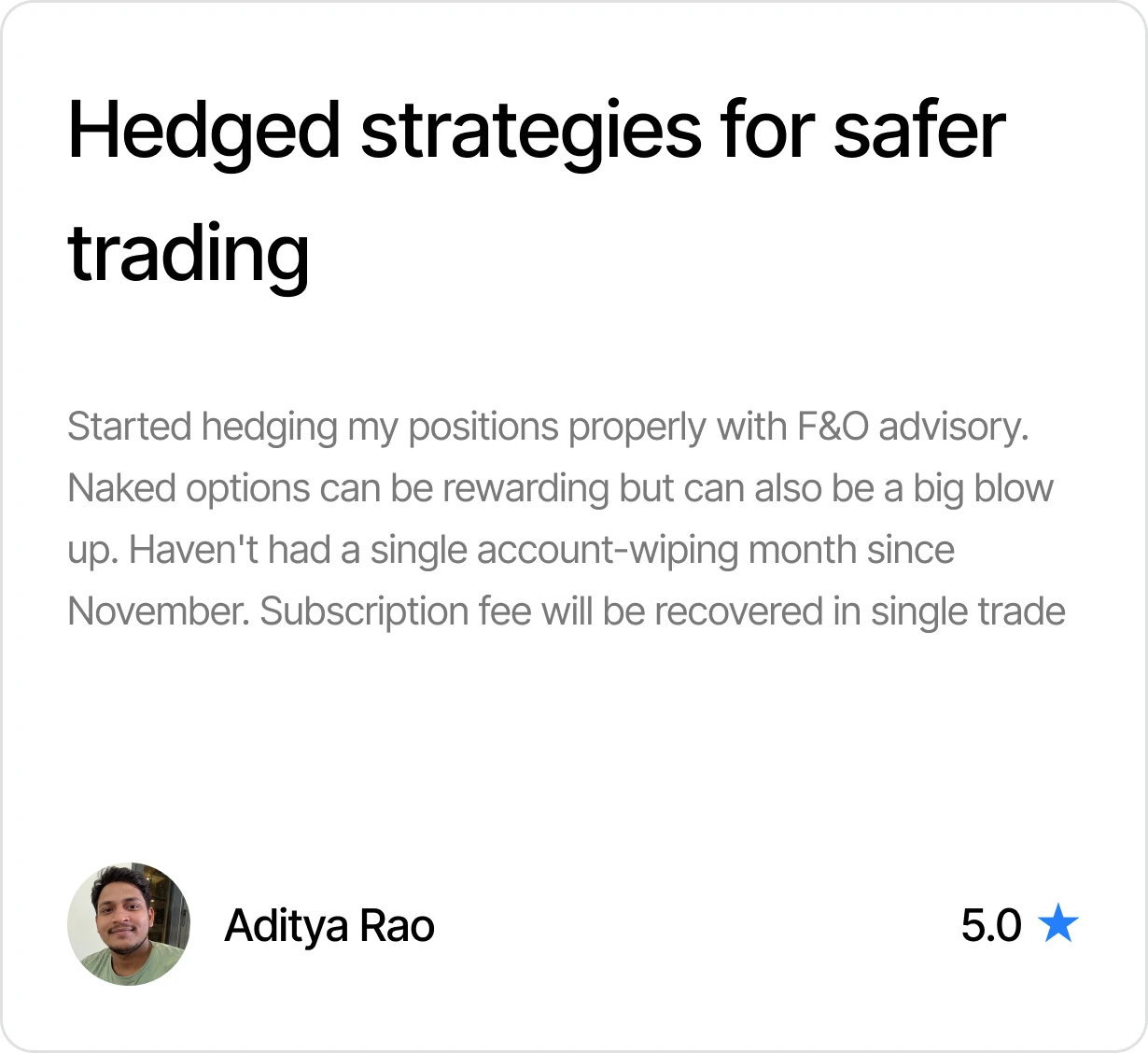
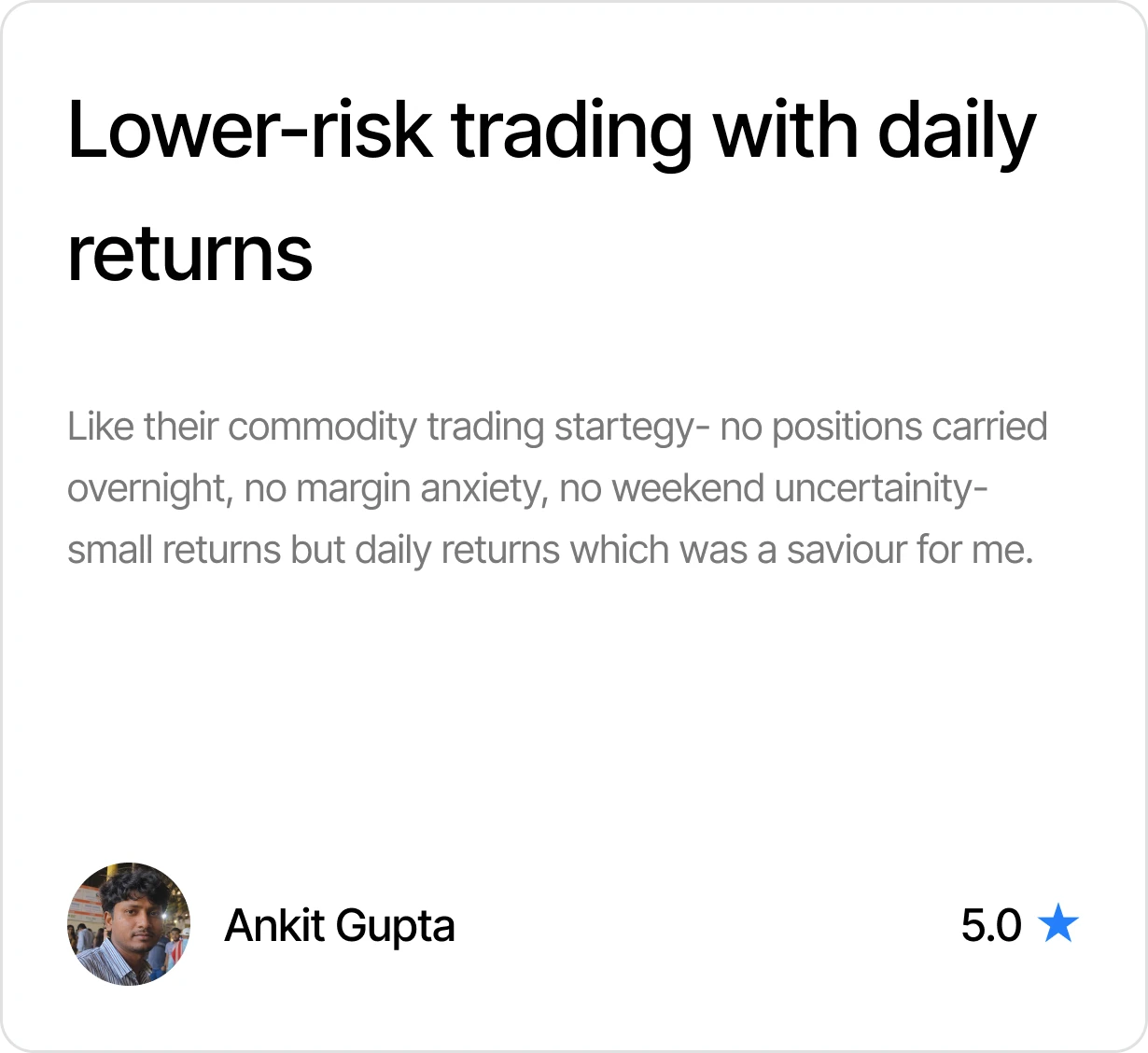
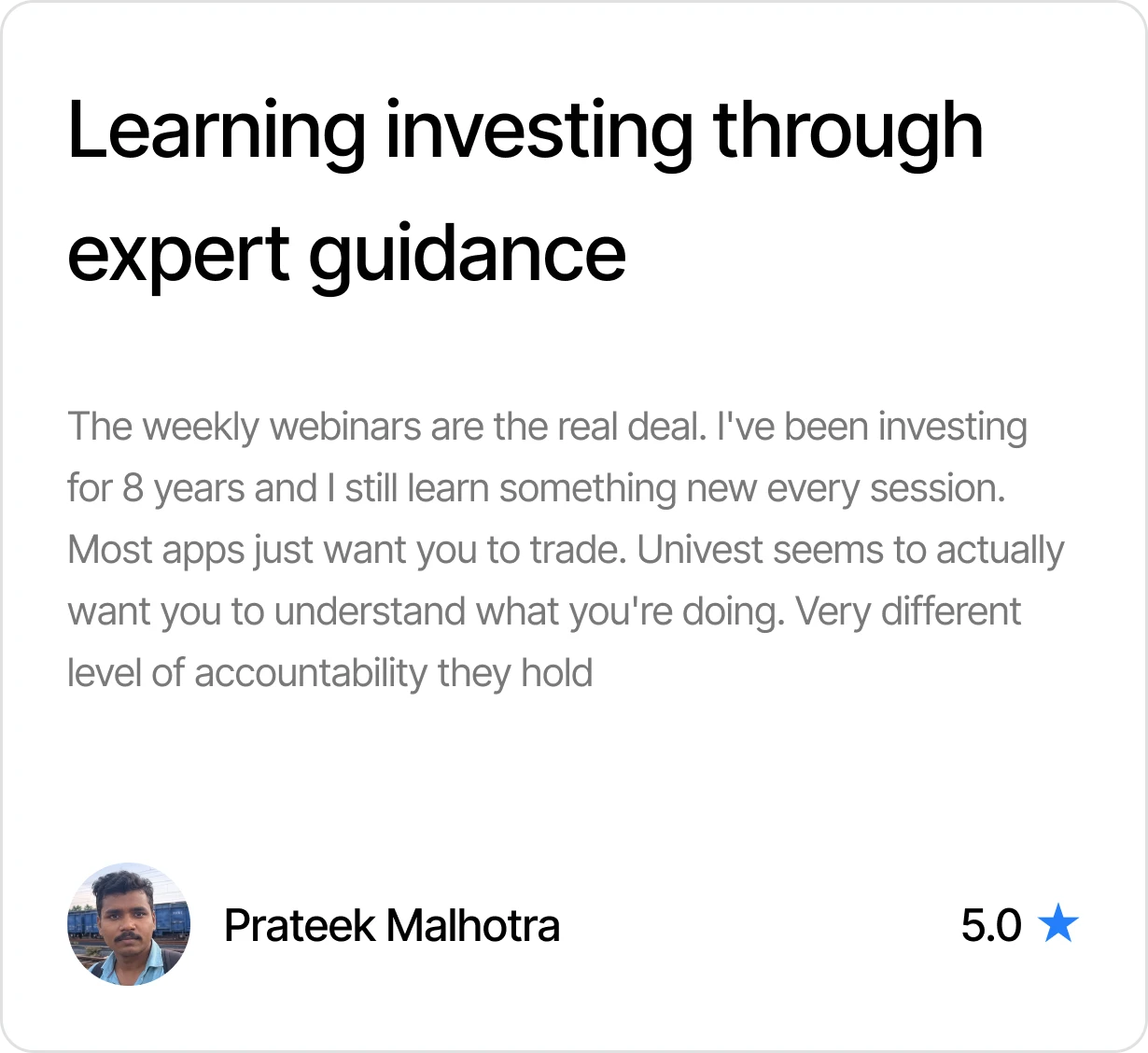
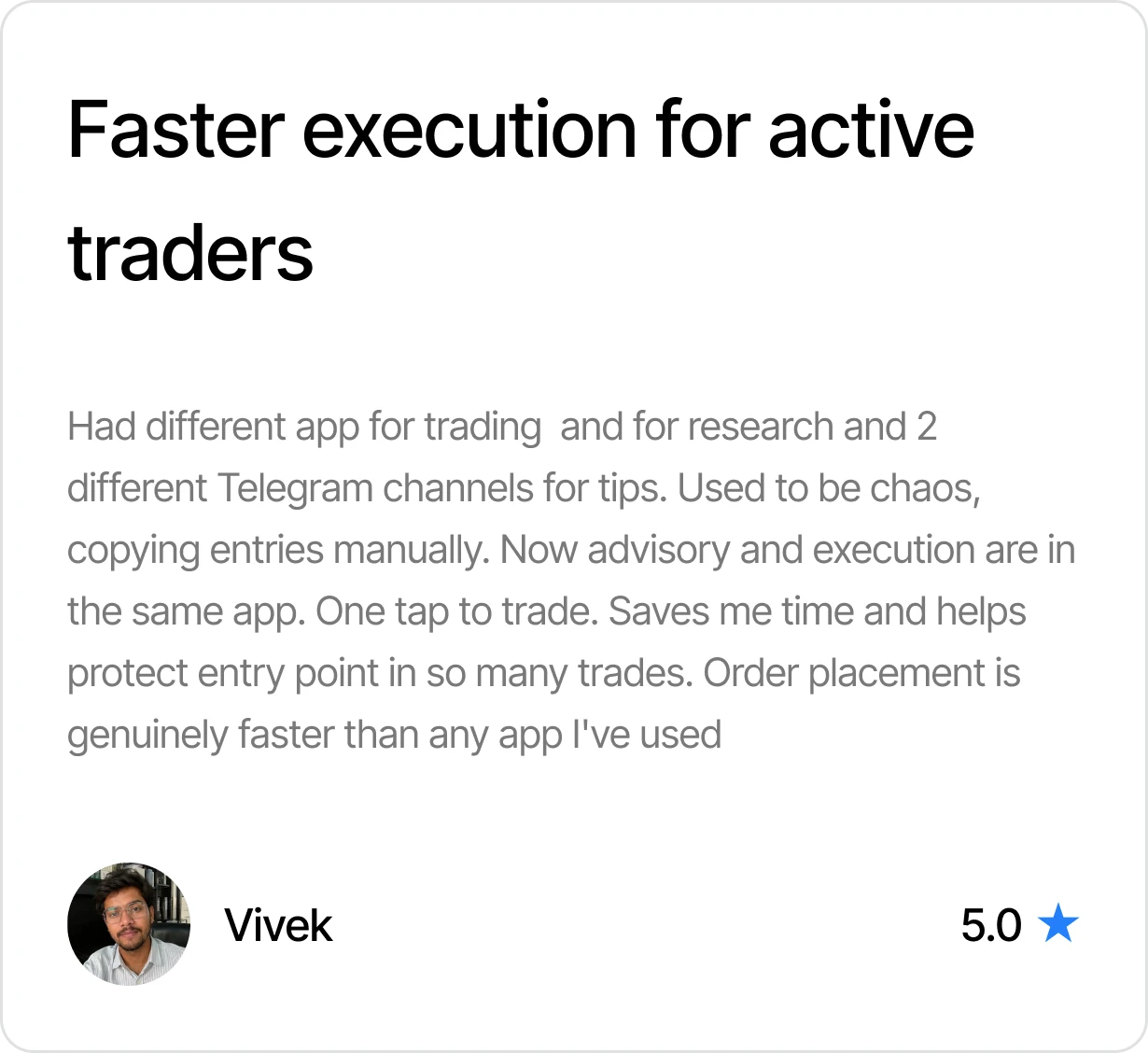
Recent Posts
Onelife Capital Advisors Share: Bull Case vs Bear Case for 2026
Univest vs Standard Investment Apps for Research and Advisory
What Is the Investment Advisor Advance Fee Limit for Individual Clients?
How Does the Investment Advisor Risk Profiling Process Actually Work?
How Does the Investment Advisor Grievance Redressal Process Work?

Uniresearch Global Pvt Ltd
Research Analyst
SEBI Registration Number — INH000013776
Uniresearch is a subsidiary of Univest Communication Technologies Private Limited
Company Address: Registered Address: Ground Floor, Unitech Commercial Tower 2, Block B, Greenwood City, Unit 1-3, Sector 45, Gurugram, Haryana 122003
Write to us : support@univest.in, compliance@univest.in
Verify on SEBI registry →RESEARCH ANALYST
Get SEBI Registered
advice on the stocks
trending today.
Get 3 FREE Trade Ideas

for Startups Accelerator 2024

Trusted by 1Cr Indians

Awarded No.1 by Economic Times