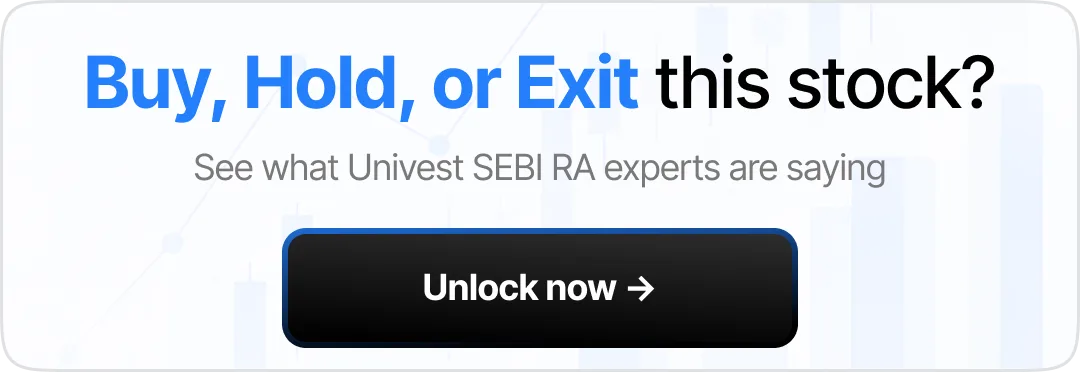
Index Fund vs ETF: How Each Tracks an Index, Costs, Demat Needs, Liquidity and Which One Suits a Long Term Investor
Index fund: bought from a fund house at NAV, SIP friendly, no demat needed. ETF: traded on the exchange at market price, needs a demat account, pays brokerage. Both track an index at low cost.
Updated: 16 Nov 2026 • 2:08 pm
Posted by:
Quick Answer
Index fund vs ETF comes down to how you buy. An index fund is a mutual fund bought from the fund house at the day's NAV, and it needs no demat account and supports SIPs. An ETF is traded on the stock exchange at live prices through a demat account. Both copy an index at low cost, so differences lie in convenience, liquidity and trading costs.
Index fund vs ETF is a common choice for investors who want to follow the Nifty 50 or Sensex without picking stocks, and both give passive exposure at low cost.
This guide compares them on how they trade, cost, convenience and tracking, and shows who each may suit.
Click Here – Get Free Investment Predictions
What Is an Index Fund?
An index fund is a mutual fund that holds the same stocks as an index in the same weights. You buy and sell units with the fund house or through a platform at the net asset value declared after market close. You can invest a lump sum or a SIP, and you do not need a demat account.
What Is an ETF?
An exchange traded fund also tracks an index, but its units are listed on the stock exchange. You buy and sell during market hours at the live price, like a share, through a demat and trading account. Market makers help keep the price close to the fund's real value, which is shown as an indicative NAV.
Index Fund vs ETF: Side by Side
| Feature | Index fund | ETF |
|---|---|---|
| Where bought | Fund house or platform | Stock exchange |
| Price | End of day NAV | Live market price |
| Demat account | Not needed | Needed |
| SIP | Easy, automatic | Possible through broker SIP tools, less common |
| Extra costs | Expense ratio | Expense ratio, brokerage, bid ask spread |
| Expense ratio | Slightly higher in many cases | Often slightly lower |
| Liquidity | Redeem with the fund house | Depends on trading volumes |
Cost and Tracking
Both are low cost compared with active funds. ETFs often have a lower expense ratio, but you also pay brokerage and the gap between buying and selling prices, and thinly traded ETFs can have a wide gap. Index funds have no brokerage in direct plans, though the expense ratio may be a little higher. Compare tracking error, which shows how closely the fund follows its index. A lower tracking error is better.
Use the Univest Screener to check live fundamentals before you act on any idea.
Which One May Suit You
- Choose an index fund if you want simple, automated SIPs and do not have a demat account.
- Choose an ETF if you trade often, want live pricing or prefer lower expense ratios and are comfortable with a demat account.
- If you invest a fixed amount every month for years, the convenience of an index fund is often worth a slightly higher expense ratio.
- For a large lump sum, compare total cost, including brokerage and spread, on both.
Both types follow the same underlying index, such as the Nifty 50, so market returns will be similar before costs. The difference lies in how you buy and what you pay.
Points to Check Before Buying
- The index being tracked, and whether it fits your goal.
- Expense ratio, tracking error and the fund house's record.
- For ETFs, daily trading volume and the bid ask spread.
- Tax treatment, which is the same type of equity taxation for both in many cases but should be checked.
- Your own habits, since a fund that suits your routine is the one you will keep investing in.
Both products are forms of passive investing, so the fund manager does not pick stocks, and returns follow the index.
Download the Univest iOS App or Univest Android App to get daily stock research and market updates.
Conclusion
Index funds and ETFs both track an index at low cost. Index funds suit SIP investors without a demat account, while ETFs suit those who want live trading and lower expense ratios.
Compare total costs and tracking error, and choose the one that matches how you invest.
Disclaimer: Data and figures in this article are sourced from publicly available information. These may or may not be accurate. Please verify all data with the official NSE (nseindia.com) and BSE (bseindia.com) websites before making any investment decision. Investments in securities are subject to market risk. This content is for educational purposes only and is not investment advice by Univest (SEBI RA INH000013776).
Frequently Asked Questions
What is the difference between an index fund and an ETF?
Ans. An index fund is bought from a fund house at the end of day NAV and needs no demat account. An ETF trades on the stock exchange at live prices and needs a demat account.
Which is better for SIP, index fund or ETF?
Ans. Index funds are generally easier for SIPs, as investments are automatic and need no demat account. ETF SIPs are possible on some platforms, but they are less common.
Is an ETF lower cost than an index fund?
Ans. ETFs often have a lower expense ratio, but you also pay brokerage and the bid ask spread. Index funds may have a slightly higher expense ratio but no brokerage in direct plans.
What is tracking error?
Ans. Tracking error shows how far a fund's returns differ from its index. A lower figure means the fund follows the index more closely. It is caused by costs, cash holdings and trading.
Do I need a demat account for an index fund?
Ans. No. You can invest in an index fund directly with the fund house or through a platform without a demat account. A demat account is needed for ETFs.
Are ETFs more liquid than index funds?
Ans. ETFs can be sold any time during market hours, but liquidity depends on trading volumes and thinly traded ETFs may have wide spreads. Index funds are redeemed with the fund house at NAV.
Can I hold both an index fund and an ETF?
Ans. You can, but if they track the same index, it adds no diversification. Many investors choose one for each index, and pick based on convenience and total cost.
Recent Articles

SEBI F&O Study FY22 to FY26: What the Data Says About Retail Traders' Losses in India
16 November 2026

How to Read a Balance Sheet: Assets, Liabilities, Equity and the Key Ratios Every Share Investor Should Check Before Buying
16 November 2026

DuPont Analysis Explained: Breaking Return on Equity Into Margin, Asset Turnover and Equity Multiplier With a Worked Example
16 November 2026

Price to Book Ratio Explained: How to Calculate P/B, What a Low or High PB Means and Why Banks Are Valued This Way
16 November 2026
Note: This blog is for information purpose only. Investments and trading are subject to market risks, read all scheme related documents carefully.
Reviews


Recent Posts
SEBI F&O Study FY22 to FY26: What the Data Says About Retail Traders' Losses in India
How to Read a Balance Sheet: Assets, Liabilities, Equity and the Key Ratios Every Share Investor Should Check Before Buying
DuPont Analysis Explained: Breaking Return on Equity Into Margin, Asset Turnover and Equity Multiplier With a Worked Example
Price to Book Ratio Explained: How to Calculate P/B, What a Low or High PB Means and Why Banks Are Valued This Way
Repo Rate and Stock Market: How RBI Rate Decisions Move Banks, Real Estate, Autos and the Index, and What Investors Should Watch
Popular this week
REIT and InvIT Explained: How They Earn, Distribution Rules, Taxation, Risks and How They Differ From Direct Property Investing

Uniresearch Global Pvt Ltd
Research Analyst
SEBI Registration Number — INH000013776
Uniresearch is a subsidiary of Univest Communication Technologies Private Limited
Company Address: Registered Address: Ground Floor, Unitech Commercial Tower 2, Block B, Greenwood City, Unit 1-3, Sector 45, Gurugram, Haryana 122003
Write to us : support@univest.in, compliance@univest.in
Verify on SEBI registry →RESEARCH ANALYST
Get SEBI Registered
advice on the stocks
trending today.
Get 3 FREE Trade Ideas

for Startups Accelerator 2024

Trusted by 1Cr Indians

Awarded No.1 by Economic Times