
Pros and Cons of Investing in Himatsingka Seide Share: Luxury Home Textile Export Analysis
- August 12, 2026
- Posted by: Lakshit Sharma
- Category: News
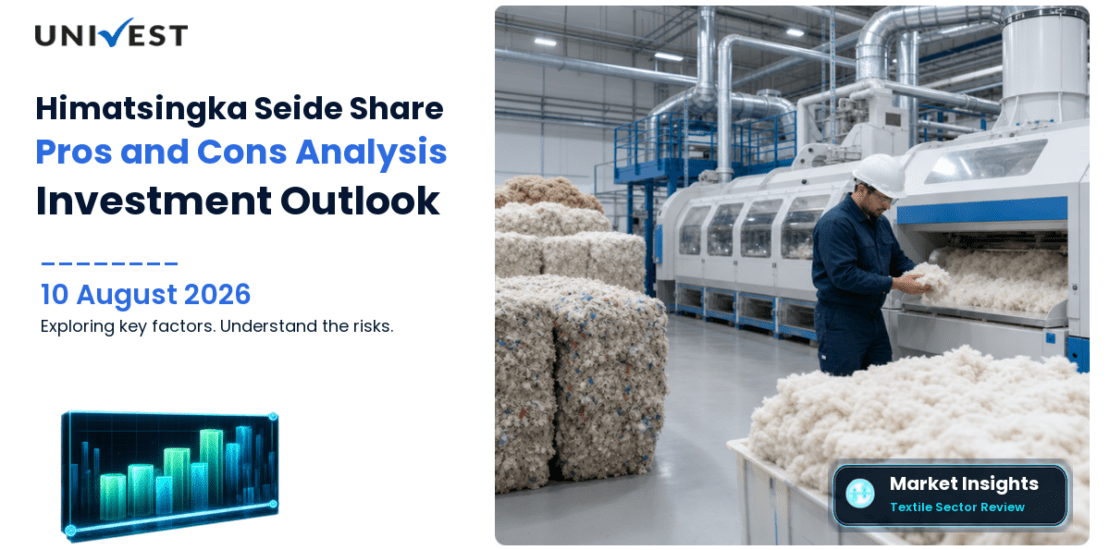
Himatsingka Seide (HIMATSEIDE) | Luxury Home Textile Export USA. MCap ~Rs 4,000 Cr. Bengaluru-based. Bed and bath textiles for US department stores.
What are the pros and cons of investing in Himatsingka Seide share?
The pros of Himatsingka Seide share include luxury US home textile supply relationships, branded bed and bath product portfolio, and integrated manufacturing. Key cons include high debt, US retail demand cycles, and cotton input cost volatility.
The pros and cons of Himatsingka Seide share relate to a premium home textile exporter serving the US luxury retail market. Himatsingka Seide supplies high-quality bed linen and bath textile products to major US department stores and retailers, with branded product capabilities that allow premium pricing.
Evaluating the pros and cons of Himatsingka Seide share requires examining the premium home textile export model, where quality brand relationships and integrated manufacturing determine margin quality. This five-pros and four-cons analysis provides a balanced investor view of HIMATSEIDE.
Click Here – Get Free Investment Predictions
Pros of Investing in Himatsingka Seide Share
1. Premium US Home Textile Supply Relationships for Luxury Retail
Himatsingka supplies to premium US department stores with branded and private label products. Premium retail relationships command better pricing and margins, which is a commercial pro of Himatsingka Seide share.
2. Branded Home Textile Portfolio Including Churchill Weavers and DWI
Himatsingka has acquired US home textile brands, enabling direct consumer brand engagement. Owned brand portfolio is a premium value chain pro of Himatsingka Seide share.
3. Integrated Spinning, Weaving, and Finishing Manufacturing
Himatsingka’s vertically integrated manufacturing from yarn to finished bed linen improves quality control and cost efficiency. Vertical integration is a manufacturing pro of Himatsingka Seide share.
4. India Home Textile Export Growth From China-Plus-One Demand
US retailers diversifying home textile sourcing away from China benefit Indian manufacturers including Himatsingka. China-plus-one opportunity is a market tailwind pro of Himatsingka Seide share.
5. Technical Innovation in Specialty Fabric Weaves Supports Premiumisation
Himatsingka invests in specialty weaving techniques and technical fabric innovation for premium bed and bath applications. Product quality innovation is a margin improvement pro of Himatsingka Seide share.
Cons of Investing in Himatsingka Seide Share
1. High Debt Level From Historical Capacity and Brand Acquisitions
Himatsingka carries significant debt from past brand acquisitions and capacity expansion. High debt compresses earnings and is a financial risk con of Himatsingka Seide share.
2. US Home Textile Retail Demand Is Cyclical With Consumer Spending
Luxury home textile demand in the US is sensitive to consumer spending confidence and discretionary income. US demand cycles are a revenue risk con of Himatsingka Seide share.
3. Cotton Price Volatility Impacts Integrated Textile Manufacturing Margins
Cotton input cost spikes compress Himatsingka’s margins across its integrated manufacturing operations. Cotton cost risk is an input sensitivity con of Himatsingka Seide share.
4. US Retail Channel Shifts Including Department Store Weakness
US department stores, a key channel for Himatsingka’s premium products, have faced secular decline pressures from e-commerce. Channel shift risk is a structural market challenge con of Himatsingka Seide share.
Analyse Himatsingka Seide Fundamentals Free on the Univest Screener
Himatsingka Seide Stock at a Glance
Himatsingka Seide (NSE: HIMATSEIDE) has an approximate market capitalisation of Rs 4,000 Cr. Monitor debt reduction progress, US retail demand, cotton prices, and brand product revenue. Verify all data on nseindia.com.
Download the Univest iOS App or Univest Android App to track Himatsingka Seide share price and get daily expert stock recommendations.
Should You Invest in Himatsingka Seide Share?
The pros and cons of Himatsingka Seide share suggest it is a recovery play for investors who see value in its premium US textile relationships and brand portfolio. High debt levels are the most critical risk to evaluate before investing.
Conclusion
The pros and cons of Himatsingka Seide share present a premium luxury home textile exporter with US retail relationships, owned brand portfolio, and integrated manufacturing, offset by high debt burden, US retail cyclicality, cotton cost risk, and department store channel challenges. Study all the pros and cons of Himatsingka Seide share before investing.
Disclaimer: Data and figures in this article are sourced from publicly available information. These may or may not be accurate. Please verify all data with the official NSE (nseindia.com) and BSE (bseindia.com) websites before making any investment decision. Investments in securities are subject to market risk. This content is for educational purposes only and is not investment advice by Univest (SEBI RA INH000013776).
Frequently Asked Questions on Pros and Cons of Investing in Himatsingka Seide Share
What are the pros of Himatsingka Seide share?
Ans. The pros include premium US home textile supply relationships with luxury retailers, owned US home textile brand portfolio, vertically integrated manufacturing from yarn to finished products, China-plus-one demand benefiting Indian home textile exporters, and specialty weaving innovation for premium applications.
What are the cons of Himatsingka Seide share?
Ans. The cons include high debt from brand acquisitions and capacity investments, US home textile retail demand cyclicality, cotton input cost volatility, and US department store secular decline from e-commerce channel shifts.
What is the NSE ticker for Himatsingka Seide?
Ans. The NSE ticker is HIMATSEIDE. Himatsingka Seide is listed on NSE and BSE and is a Bengaluru-based luxury home textile manufacturer and exporter supplying premium bed and bath products to US retailers.
What brands does Himatsingka own?
Ans. Himatsingka has acquired US home textile brands including Churchill Weavers and DWI Holdings, which market bed linen and bath products to US consumers. These brand acquisitions give Himatsingka direct consumer brand equity in the premium segment.
Is Himatsingka Seide a good home textile investment?
Ans. The pros and cons of Himatsingka Seide share suggest it may suit recovery investors who see debt reduction potential and premium US textile demand. High debt is the most important risk to track before making any investment commitment.
What is the MCap of Himatsingka Seide?
Ans. Himatsingka Seide has an approximate market capitalisation of Rs 4,000 Cr. Investors should monitor debt levels, US retail partner performance, and cotton price trends on nseindia.com before making any investment decision.