
Power Grid vs Adani Energy Solutions: PSU vs Private Transmission Play
- July 14, 2026
- Posted by: Neeraj Pandey
- Category: Market
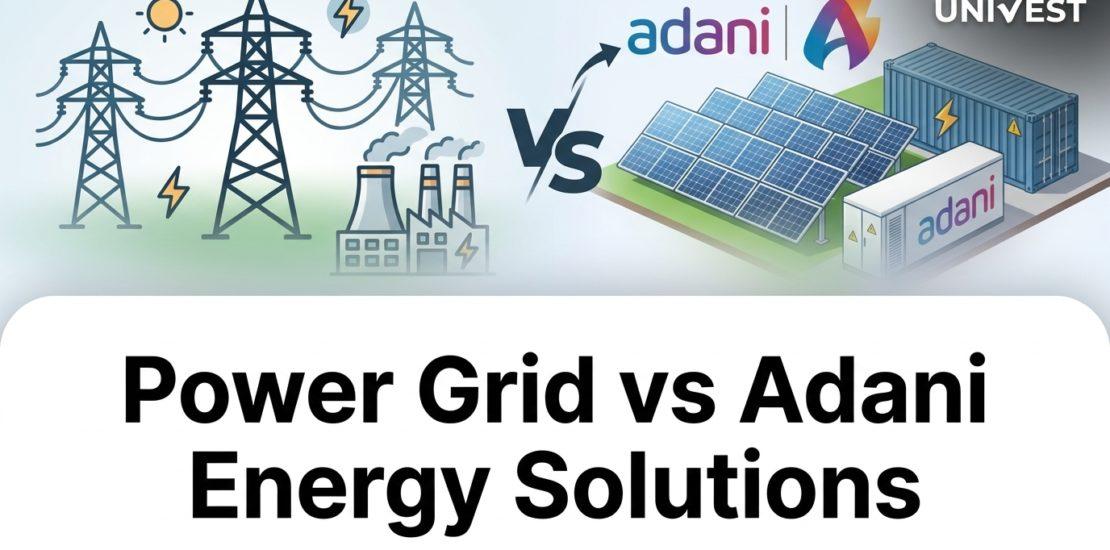
Power Grid CMP Rs 282.90, mkt cap Rs 2,64,463 Cr, capex Rs 82,000 Cr FY27-28. Adani Energy Solutions is the leading private transmission challenger.
Power Grid vs Adani Energy Solutions: PSU vs private transmission play is a comparison increasingly relevant to investors as India’s power transmission sector sees growing private sector participation alongside Power Grid’s continued dominant government-owned position.
Power Grid has historically held a near-monopoly position in India’s interstate transmission network, but private players like Adani Energy Solutions are expanding their footprint, particularly in newer transmission corridors and renewable energy evacuation projects, creating a genuine PSU versus private sector comparison in this space.
Click Here – Get Free Investment Predictions
This article examines Power Grid vs Adani Energy Solutions: PSU vs private transmission play, covering their different business positioning and the risks of comparing a government incumbent against a private challenger.
Framing Power Grid vs Adani Energy Solutions: PSU vs Private Transmission Play
Power Grid vs Adani Energy Solutions: PSU vs private transmission play requires comparing Power Grid’s established, regulated-return dominance across India’s interstate transmission network against Adani Energy Solutions’ more recent, growth-oriented private sector expansion into select transmission corridors and renewable evacuation projects.
Power Grid’s scale, with an Rs 82,000 crore capex plan through FY28, dwarfs most private transmission players, but Adani Energy Solutions represents the most credible private sector challenger seeking to capture incremental transmission capacity growth alongside the PSU incumbent.
Comparing the Fundamentals Behind Power Grid vs Adani Energy Solutions
Evaluating Power Grid vs Adani Energy Solutions: PSU vs private transmission play involves weighing Power Grid’s regulatory scale, dividend income and lower execution risk against Adani Energy Solutions’ potentially faster private-sector growth trajectory and higher risk-reward profile.
- Power Grid’s dominant scale: In the Power Grid vs Adani Energy Solutions: PSU vs private transmission play comparison, Power Grid’s Rs 82,000 crore capex plan gives it unmatched scale.
- Private sector growth ambitions: In the Power Grid vs Adani Energy Solutions comparison, private players are expanding into newer transmission corridors.
- Regulated return versus growth premium: Power Grid vs Adani Energy Solutions: PSU vs private transmission play shows Power Grid earning fixed regulated returns versus private higher-risk projects.
- Dividend income differential: Power Grid’s established dividend yield near 4.75 percent typically exceeds what growth-focused private transmission players distribute.
| Metric | Power Grid Corporation | Adani Energy Solutions |
|---|---|---|
| CMP (Rs) | 282.90 | – |
| Market Cap (Rs Cr) | 2,64,463 | – |
| Ownership | Government-owned PSU | Private sector, Adani Group |
| Capex Plan | Rs 82,000 Cr FY27-28 | Growth-stage private expansion |
Power Grid: The Regulated PSU Incumbent
Power Grid’s argument in the Power Grid vs Adani Energy Solutions: PSU vs private transmission play debate rests on its dominant, established position across India’s interstate transmission network, backed by a regulated-return model that provides predictable earnings and consistent dividend income.
The company’s Rs 82,000 crore FY27-28 capex plan and government backing give it scale advantages that private challengers find difficult to replicate quickly, particularly for the core interstate backbone transmission network.
Adani Energy Solutions: The Private Sector Challenger
Adani Energy Solutions represents the private sector side of the Power Grid vs Adani Energy Solutions: PSU vs private transmission play comparison, pursuing growth in select transmission corridors and renewable energy evacuation infrastructure as India’s overall transmission capacity needs expand.
As a private player, Adani Energy Solutions may pursue a different risk-return profile than Power Grid’s regulated model, potentially offering higher growth rates in specific project categories, though generally with less of the scale and dividend stability that characterises the PSU incumbent.
Get SEBI-Registered Research on Transmission Sector Stocks
Download the Univest iOS App or Univest Android App to track Power Grid and Adani Energy Solutions live prices.
Factors Deciding Power Grid vs Adani Energy Solutions: PSU vs Private Transmission Play
- Regulatory framework differences: Power Grid’s regulated returns differ from how private transmission projects may be structured and compensated.
- Execution track record: Power Grid’s decades of established execution history contrasts with Adani Energy Solutions’ more recent growth trajectory.
- Capital access and cost: The Power Grid vs Adani Energy Solutions: PSU vs private transmission play comparison shows government backing giving Power Grid capital cost advantages.
- Growth rate potential: Private players starting from a smaller base may show higher percentage growth rates even if absolute scale remains smaller.
- Dividend versus growth orientation: Power Grid’s established dividend policy contrasts with a potentially more growth-oriented capital allocation approach for private players.
Benefits of Comparing Power Grid vs Adani Energy Solutions
- PSU versus private sector clarity: Power Grid vs Adani Energy Solutions: PSU vs private transmission play helps investors understand government-backed stability versus private growth potential.
- Sector growth context: Power Grid vs Adani Energy Solutions: PSU vs private transmission play illustrates the broader expansion of India’s transmission sector.
- Risk-return profile differentiation: Power Grid vs Adani Energy Solutions: PSU vs private transmission play clarifies different risk-return profiles within the transmission sector.
- Diversification consideration: Some investors may consider exposure to both the established PSU and emerging private players for diversified transmission sector exposure.
- Regulatory model understanding: Comparing the two helps investors understand how regulated-return and private growth models differ in the transmission sector.
Risks in the Power Grid vs Adani Energy Solutions Comparison
- Power Grid’s regulatory dependence: In the Power Grid vs Adani Energy Solutions: PSU vs private transmission play comparison, Power Grid’s predictable returns depend on stable tariff regulation.
- Private sector execution risk: Adani Energy Solutions and other private transmission players may carry different execution and financing risks than the established PSU.
- Data availability limitations: Direct financial comparison can be complicated by differences in disclosure practices and business structure between PSU and private players.
- Competitive dynamics evolution: The balance between PSU and private transmission capacity could shift over time as government policy evolves.
- Group-level risk considerations: Private players linked to larger corporate groups may carry additional group-level risk considerations distinct from standalone PSU risk.
How to Decide Power Grid vs Adani Energy Solutions: PSU vs Private Transmission Play
- In the Power Grid vs Adani Energy Solutions: PSU vs private transmission play decision, choose Power Grid for regulated-return stability.
- Consider private transmission players if seeking potentially higher growth rates with correspondingly higher risk.
- Assess regulatory framework differences between PSU and private transmission compensation models.
- Review execution track record differences between the established PSU and newer private entrants.
- Consider whether diversified exposure across both PSU and private transmission makes sense for your portfolio.
How to Invest Based on Power Grid vs Adani Energy Solutions: PSU vs Private Transmission Play
- Use the Univest platform to research transmission sector fundamentals across PSU and private players.
- Open a demat and trading account with Univest for zero-brokerage execution.
- Track quarterly results and capex execution for Power Grid through the Univest app.
- Consult a SEBI-registered advisor before allocating capital across PSU and private transmission stocks.
- Review positions periodically as India’s transmission sector competitive dynamics evolve.
Conclusion
The Power Grid vs Adani Energy Solutions: PSU vs private transmission play comparison illustrates the broader evolution of India’s transmission sector, with Power Grid’s established, regulated-return scale contrasting against private sector growth ambitions in select transmission corridors. Historically, Power Grid’s government backing and regulatory framework have provided a distinct stability advantage, though India’s overall transmission capacity growth creates room for both PSU and private participation. Consult a SEBI-registered advisor before making investment decisions.
Disclaimer: Data and figures in this article are sourced from publicly available information. These may or may not be accurate. Please verify all data with the official NSE (nseindia.com) and BSE (bseindia.com) websites before making any investment decision. Investments in securities are subject to market risk. This content is for educational purposes only and is not investment advice by Univest (SEBI RA INH000013776).
FAQs
Power Grid vs Adani Energy Solutions: PSU vs private transmission play, which is better?
Ans. Power Grid vs Adani Energy Solutions: PSU vs private transmission play depends on investor preference, with Power Grid offering regulated stability and private players potentially offering higher growth rates with more risk.
What is Power Grid’s capex plan compared to private transmission players?
Ans. In the Power Grid vs Adani Energy Solutions comparison, Power Grid has outlined an Rs 82,000 crore capex plan for FY27-28, reflecting its dominant scale in India’s transmission sector.
Why is Adani Energy Solutions considered a transmission sector challenger?
Ans. Adani Energy Solutions, in the Power Grid vs Adani Energy Solutions: PSU vs private transmission play comparison, is expanding into select transmission corridors and renewable evacuation infrastructure as a private sector player.
Does Power Grid have a monopoly on India’s transmission network?
Ans. Power Grid has historically held a near-monopoly position in interstate transmission, though the Power Grid vs Adani Energy Solutions comparison reflects growing private sector participation in newer corridors.
Is Power Grid safer than private transmission players like Adani Energy Solutions?
Ans. In the Power Grid vs Adani Energy Solutions comparison, Power Grid’s regulated-return PSU model generally offers more predictable, lower-risk returns compared to private sector growth-stage players.
What risks apply to the Power Grid vs Adani Energy Solutions comparison?
Ans. Key risks include Power Grid’s dependence on regulatory tariff stability, private sector execution and financing risk, and evolving competitive dynamics in India’s transmission sector.
