
City Union Bank Bonus Share 1:3 Record Date June 12 2026: Ex-Date, Eligibility, Post-Bonus Price and Financial Highlights
- June 9, 2026
- Posted by: Ankit Jaiswal
- Category: News
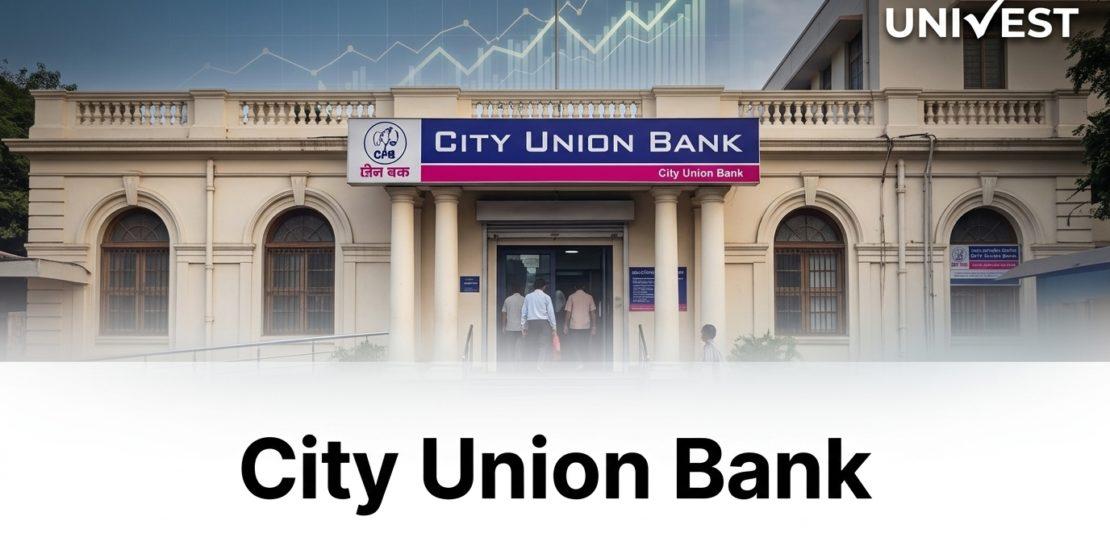
City Union Bank bonus share 1:3 ratio. Record date June 12, 2026. Last day June 11. CMP Rs 250.70 (NSE). Deposits Rs 78,308 Cr. NIM 3.74%.
City Union Bank has declared a City Union Bank bonus share in the ratio of 1:3, entitling shareholders to one additional fully paid-up equity share of Re 1 each for every three existing shares held on the record date. The City Union Bank bonus share record date and ex-date are both June 12, 2026. Investors must hold City Union Bank shares by end of day June 11, 2026 to qualify for this City Union Bank bonus share. City Union Bank (NSE: CUB; BSE: CUB) trades at Rs 250.70 on NSE as on June 9, 2026.
The City Union Bank bonus share was approved by the Board of Directors on May 25, 2026, pursuant to Regulation 42 of the SEBI Listing Regulations. This City Union Bank bonus share is the first since 2018, when the bank issued a 1:10 bonus. After an eight-year gap, the City Union Bank bonus share at the more generous 1:3 ratio is a significant reward for long-term CUB shareholders.
Click Here – Get Free Investment Predictions
| City Union Bank Bonus Share Detail | Information |
|---|---|
| Company | City Union Bank Limited |
| NSE / BSE Symbol | CUB |
| City Union Bank Bonus Share Ratio | 1:3 (1 new share for every 3 held) |
| Ex-Date | June 12, 2026 |
| Record Date | June 12, 2026 |
| Last Day to Buy | June 11, 2026 |
| Board Approval | May 25, 2026 |
| Face Value | Re 1 per share |
| CMP (June 9, 2026) | Rs 250.70 (NSE) / Rs 251.50 (BSE) |
| Post-Bonus Theoretical Price | ~Rs 188 (Rs 250.70 x 3/4) |
| Market Cap | ~Rs 18,183 crore |
| EPS | Rs 17.8 |
| ROE | 13.2% |
| Previous City Union Bank Bonus Share | 1:10 ratio in 2018 |
Track Bonus Shares and Corporate Actions in Real Time
Univest analysts track upcoming bonus issues, dividends, and splits across all BSE and NSE companies.
City Union Bank Bonus Share 1:3: Calculation and Shareholder Impact
The City Union Bank bonus share ratio of 1:3 means for every 3 shares held on June 12, 2026, shareholders receive 1 additional free share. Total shares increase by 33.33% from the City Union Bank bonus share. The CMP adjusts proportionally on the ex-date so total wealth remains unchanged.
| Shares on Record Date | City Union Bank Bonus Shares Received | Total Post-Bonus |
|---|---|---|
| 300 shares | 100 shares | 400 shares |
| 1,500 shares | 500 shares | 2,000 shares |
| 3,000 shares | 1,000 shares | 4,000 shares |
| 9,000 shares | 3,000 shares | 12,000 shares |
With CMP at Rs 250.70 today, the City Union Bank bonus share theoretical post-bonus price is Rs 250.70 x 3/4 = approximately Rs 188 per share. If your holding is not exactly divisible by 3, the fractional City Union Bank bonus share entitlement is settled in cash by the bank after the record date.
City Union Bank Financial Highlights: The Strength Behind the Bonus Share
City Union Bank Limited was established in 1904 and is one of India’s oldest private sector banks, headquartered in Kumbakonam, Tamil Nadu. The City Union Bank bonus share announcement reflects strong financial performance. As of March 31, 2026, total deposits stood at Rs 78,308 crore, total advances at Rs 66,699 crore, net interest margin (NIM) at 3.74%, and net NPA at just 0.68%.
EPS is Rs 17.8 and ROE is 13.2%. The City Union Bank bonus share is capitalised from the bank’s accumulated reserves, reflecting a healthy and well-capitalised balance sheet. In May 2026, R. Vijay Anandh was appointed MD and CEO following Dr. N. Kamakodi’s 15-year tenure. The City Union Bank bonus share announcement shortly after this leadership transition signals the new management’s commitment to shareholder returns from the outset of its tenure.
| City Union Bank Financial Metric | Value |
|---|---|
| Total Deposits (March 2026) | Rs 78,308 crore |
| Total Advances (March 2026) | Rs 66,699 crore |
| Net Interest Margin (NIM) | 3.74% |
| Net NPA Ratio | 0.68% |
| Earnings Per Share (EPS) | Rs 17.8 |
| Return on Equity (ROE) | 13.2% |
| Market Cap | ~Rs 18,183 crore |
| CMP | Rs 250.70 (NSE, June 9, 2026) |
Eligibility and Credit Timeline for the City Union Bank Bonus Share
To receive the City Union Bank bonus share, investors must hold CUB shares in their demat account by end of day June 11, 2026. Under T+1 settlement, shares purchased on June 11 settle on June 12 and WILL qualify for the City Union Bank bonus share since the record date is June 12. Shares purchased on June 12 (the ex-date) settle on June 13 and will NOT qualify for the City Union Bank bonus share. Once eligible, no separate application is needed; the City Union Bank bonus share will be automatically credited to your demat account after the record date. Track the City Union Bank bonus share credit status through your broker app or directly on nseindia.com.
What Are Bonus Shares and Why Do Companies Issue Them
Bonus shares are free additional shares distributed by a company to its existing shareholders, funded from accumulated free reserves or securities premium account. No payment is required. The per-share price adjusts downward on the ex-date so total shareholder wealth stays the same: holding 3 shares at Rs 300 each (Rs 900 total) becomes 4 shares at Rs 225 each (Rs 900 total) after a 1:3 bonus. Companies issue bonus shares to reward long-term shareholders, capitalise accumulated reserves, reduce the per-share price for improved liquidity, and signal confidence in future earnings growth to the broader market.
Key Dates for Bonus Share Eligibility: Ex-Date and Record Date
Every bonus issue involves three important dates. The Announcement Date is when the Board recommends the bonus. The Ex-Date is the cut-off: shares purchased on or after the ex-date do NOT carry bonus rights. The Record Date is when the company checks its shareholder register. Under India’s T+1 settlement, shares purchased today settle by end of the next trading day, so you must hold the stock in your demat account before the ex-date to qualify. In most Indian cases under T+1, the ex-date and record date fall on the same day.
Tax Treatment of Bonus Shares in India
Bonus shares are not taxable at the time of receipt. The cost of acquisition for bonus shares is treated as zero (Rs 0) for capital gains calculation. When you sell bonus shares held for more than 12 months, Long Term Capital Gains (LTCG) tax of 12.5% applies on gains above Rs 1.25 lakh per year. If sold within 12 months, Short Term Capital Gains (STCG) tax of 20% applies. The holding period for bonus shares starts from the date of allotment by the company, not from the original purchase date of the parent shares. No action is needed from investors to receive bonus shares; they are automatically credited to your demat account after the record date by the company’s registrar and transfer agent.
City Union Bank Dividend History and Shareholder Returns
In addition to the City Union Bank bonus share, the bank consistently pays annual dividends: Rs 2 per share in August 2025, Rs 1 per share in August 2024 and 2023. The combination of regular dividends and the City Union Bank bonus share demonstrates management confidence in sustained earnings. The bank’s capital adequacy ratio and Tier-1 capital position are well above regulatory minimums, supporting both dividends and bonus capitalisation from its strong reserves accumulated over more than 120 years of banking operations.
Track City Union Bank Bonus Share Record Date and Live CUB Price on Univest Screener
Download the Univest iOS App or Univest Android App to get City Union Bank bonus share alerts and live stock updates on Univest.
Private Sector Banking in India: Why City Union Bank Stands Out
India’s private sector banking industry is among the most dynamic in Asia, accounting for over 30% of total banking sector credit and growing faster than public sector banks. City Union Bank occupies a distinctive niche: a mid-sized regional private bank with over 120 years of history, deep roots in Tamil Nadu’s MSME and trade finance ecosystem, and a conservative management culture that has consistently delivered sector-leading asset quality. While larger private banks like HDFC Bank, ICICI Bank, and Axis Bank dominate national headlines, City Union Bank has quietly built a strong franchise serving smaller businesses, agricultural borrowers, and retail customers across Tamil Nadu, Andhra Pradesh, Karnataka, and Maharashtra. Its net NPA of 0.68% as of March 2026 is one of the lowest in the sector, reflecting disciplined credit underwriting over many business cycles.
The bank’s net interest margin (NIM) of 3.74% is healthy for a bank of its size, indicating effective management of the spread between lending yields and deposit costs. In the current high-interest-rate environment globally, maintaining a stable NIM requires skilled asset-liability management, which City Union Bank has consistently demonstrated. The bank’s total deposits of Rs 78,308 crore and advances of Rs 66,699 crore imply a credit-deposit (CD) ratio of approximately 85%, suggesting healthy loan growth relative to deposit mobilisation. This strong operational foundation is what supports the bank’s ability to issue the 1:3 bonus from its accumulated free reserves.
How to Evaluate Bonus Shares from an Investment Perspective
Bonus shares are generally viewed positively by the market for several reasons. First, they signal management confidence: a board recommending a bonus issue is implicitly communicating that it expects earnings to grow sufficiently to support the enlarged equity base. Second, bonus shares improve stock liquidity: a lower per-share price after the bonus makes the stock more accessible to retail investors who may have been priced out at the higher pre-bonus level, potentially broadening the shareholder base and improving daily trading volumes. Third, bonus shares create a psychological anchoring effect: investors often perceive the post-bonus stock as “cheaper” and may accumulate more aggressively, providing near-term price support.
From a fundamental analysis perspective, bonus shares do not change anything about the company’s business, earnings power, or intrinsic value. A company worth Rs 5,000 crore before a bonus is worth Rs 5,000 crore after the bonus: the pie has not changed, only the number of slices. Therefore, sophisticated investors focus on whether the pre-bonus valuation is attractive rather than getting excited about the bonus per se. A bonus share from a fundamentally strong, well-managed bank like the one whose record date falls on June 12, 2026, is more meaningful than a bonus from a company with weak financial metrics, because the former’s enlarged share base is backed by real earnings power and sustainable reserve generation.
What Happens to the Share Price on the Ex-Bonus Date
On the ex-bonus date, the stock exchange adjusts the previous day’s closing price downward to reflect the bonus. The adjustment is purely mechanical: the new reference price is the old price divided by the ratio (1 + bonus ratio). For a 1:3 bonus, the new adjusted price = old price x 3/4. So if the stock closed at Rs 250.70 on June 11, the exchange-adjusted reference price on June 12 would be approximately Rs 188. The stock then trades freely around this adjusted reference price. It may open above or below Rs 188 depending on market sentiment, overall market direction, and demand from investors who may be buying the stock at the “lower” price after the adjustment. Historical data across Indian markets shows that stocks of fundamentally strong companies often recover to or above the pre-bonus equivalent valuation within 6-18 months of the ex-bonus date, as earnings growth and continued institutional accumulation support the price. This makes long-term holding of quality stocks through bonus cycles an effective wealth creation strategy.
Bonus Shares vs Dividends: Which Is Better for Investors
Both bonus shares and dividends are ways for companies to return value to shareholders, but they differ fundamentally. A dividend is a cash payout from the company’s profits directly to the shareholder’s bank account. A bonus share is the issuance of additional equity at no cost, funded from accumulated reserves. From a shareholder perspective, dividends are immediately monetisable and taxable, while bonus shares increase the holding size without an immediate tax event (tax deferred until sale). From a company perspective, dividends reduce the cash balance, while bonus shares capitalise reserves into equity without reducing cash, preserving liquidity for business operations and growth investments. For growth-oriented companies, bonus shares are often preferred over dividends as they reward shareholders without depleting the cash needed for business expansion. For income-oriented investors, dividends are preferred as they provide regular cash flow. Many well-managed companies combine both: paying a consistent dividend each year while periodically issuing bonus shares to capitalise accumulated reserves and reward loyal long-term shareholders. The announcement of a bonus issue alongside a dividend history is generally a positive signal of management quality and financial health, indicating that the company has built sufficient reserves to reward shareholders in multiple ways.
How to Track Corporate Actions Using Univest
Univest provides a comprehensive screener and corporate actions tracker that aggregates all upcoming bonus issues, stock splits, dividends, and rights issues across BSE and NSE listed companies. Investors can use the Univest screener at univest.in/screeners to filter by ex-date, record date, and company type to identify eligible holding periods for upcoming corporate actions. The Univest iOS App and Univest Android App send push notifications for ex-dates and record dates, helping investors stay informed about upcoming eligibility windows and avoid missing corporate actions on their existing holdings. Investors can also set personalised alerts for stocks in their watchlists, ensuring they are notified in advance of any upcoming bonus share ex-date or record date relevant to their portfolio. Univest analysts Ankit Jaiswal (Senior Research Analyst) and Kunal Singla (Associate Director, IIT Delhi) track corporate actions and their implications for stock valuations and provide research-backed context for major announcements through the Univest platform.
Conclusion
The City Union Bank bonus share at 1:3 rewards shareholders of this 122-year-old private sector bank. The City Union Bank bonus share record date is June 12, 2026. Last day to buy CUB shares for City Union Bank bonus share eligibility is June 11, 2026. At CMP Rs 250.70, the theoretical post-bonus price after the City Union Bank bonus share is approximately Rs 188. Verify all City Union Bank bonus share details at nseindia.com. This is not investment advice.
Disclaimer: Data sourced from publicly available information; may not be fully accurate. Bonus share ex-dates and record dates are subject to change; verify at bseindia.com or nseindia.com before investing. Educational content only, not investment advice by Univest (SEBI RA INH000013776). Investments are subject to market risk.
Frequently Asked Questions
What is the City Union Bank bonus share ratio?
Ans. The City Union Bank bonus share ratio is 1:3: one additional share for every three existing shares held. A holder of 3,000 CUB shares receives 1,000 City Union Bank bonus shares and holds 4,000 total.
What is the City Union Bank bonus share record date?
Ans. The City Union Bank bonus share record date and ex-date are both June 12, 2026. Last day to buy for eligibility is June 11, 2026. Purchases on June 12 (ex-date) settle after the record date and will not qualify. Verify at nseindia.com.
What will City Union Bank share price be after the bonus?
Ans. Theoretical post-bonus price after City Union Bank bonus share = pre-bonus price x 3/4. At Rs 250.70 CMP, City Union Bank bonus share theoretical post-bonus price = approximately Rs 188. Actual price may differ.
When was the last City Union Bank bonus share issued?
Ans. The last City Union Bank bonus share was issued in 2018 at a ratio of 1:10. The current City Union Bank bonus share (1:3, record date June 12, 2026) is the bank’s first bonus issue in approximately eight years.
What are City Union Bank key financial highlights?
Ans. City Union Bank (March 2026): Deposits Rs 78,308 crore; Advances Rs 66,699 crore; NIM 3.74%; Net NPA 0.68%; EPS Rs 17.8; ROE 13.2%; Market cap ~Rs 18,183 crore. Private sector bank, established 1904, Kumbakonam, Tamil Nadu.
