
Reliance Industries vs Adani Enterprises Diversification: Which Diversified Conglomerate Wins
- July 17, 2026
- Posted by: Kunal Singla
- Category: News
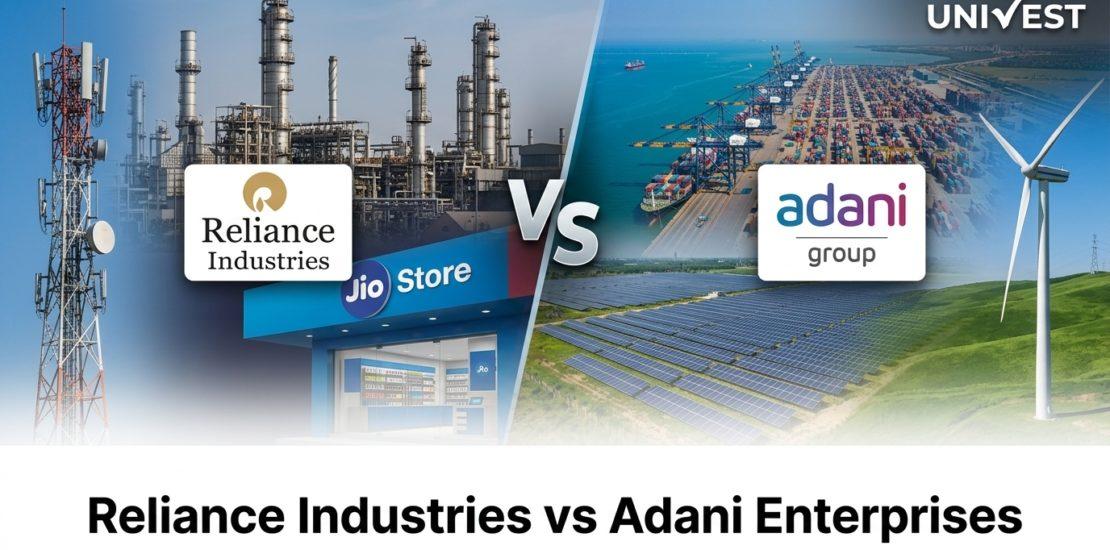
Reliance Industries India’s largest company by market cap, spanning energy, retail and telecom. Adani Enterprises diversified conglomerate spanning mining, airports, data centres and new energy.
Reliance Industries vs Adani Enterprises diversification is a comparison frequently made by investors evaluating two different ways to access India’s India’s largest diversified conglomerates theme, one built around integrated energy-to-consumer conglomerate with retail and telecom scale and the other around incubator-style diversification across mining, infrastructure and new energy.
Reliance Industries’s growth is tied to integrated energy-to-consumer conglomerate with retail and telecom scale, while Adani Enterprises’s growth depends more on incubator-style diversification across mining, infrastructure and new energy. Reliance Industries vs Adani Enterprises diversification depends significantly on which business approach an investor finds more convincing for their portfolio.
Click Here – Get Free Investment Predictions
This article examines Reliance Industries vs Adani Enterprises diversification, comparing their business models and the risks specific to each company’s growth drivers.
Framing Reliance Industries vs Adani Enterprises diversification
Reliance Industries vs Adani Enterprises diversification requires comparing two different business approaches within India’s India’s largest diversified conglomerates sector: Reliance Industries’s reliance on integrated energy-to-consumer conglomerate with retail and telecom scale, and Adani Enterprises’s reliance on incubator-style diversification across mining, infrastructure and new energy.
Reliance Industries’s its position as India’s largest company by market capitalisation, spanning integrated energy, organised retail and telecom under a single corporate structure. while Adani Enterprises’s its incubator-style diversification model, spanning mining, airports, data centres and new energy manufacturing with several newer, higher-growth businesses. These differing approaches mean Reliance Industries vs Adani Enterprises diversification depends on which risk and growth profile better matches an individual investor’s objectives.
Comparing the Fundamentals: Reliance Industries vs Adani Enterprises
Evaluating Reliance Industries vs Adani Enterprises diversification involves weighing Reliance Industries’s Reliance Industries’ scale across energy, retail and Jio telecom provides diversified cash flow that few Indian conglomerates can match. against Adani Enterprises’s Adani Enterprises’ newer business incubation approach means some segments remain in earlier growth stages compared to Reliance’s mature core businesses. Reliance Industries vs Adani Enterprises diversification ultimately comes down to which factor matters more for an individual portfolio.
- Reliance Industries’s core strength: Reliance Industries’s integrated energy-to-consumer conglomerate with retail and telecom scale anchors its position within the diversified conglomerate theme.
- Adani Enterprises’s core strength: Adani Enterprises’s incubator-style diversification across mining, infrastructure and new energy provides a distinct approach to the same India’s largest diversified conglomerates theme.
- Differing risk profiles: Reliance Industries vs Adani Enterprises diversification highlights how Reliance Industries and Adani Enterprises carry different risk exposures despite operating in the same broad sector.
- Complementary rather than mutually exclusive: Some investors use Reliance Industries vs Adani Enterprises diversification not to pick a single winner but to decide relative portfolio weighting between the two.
| Metric | Reliance Industries | Adani Enterprises |
|---|---|---|
| Key Data | India’s largest company by market cap, spanning energy, retail and telecom | diversified conglomerate spanning mining, airports, data centres and new energy |
| Business Model / Driver | Integrated energy-to-consumer conglomerate with retail and telecom scale | Incubator-style diversification across mining, infrastructure and new energy |
| Sector | Diversified Conglomerate | Diversified Conglomerate |
Reliance Industries’s Case
Reliance Industries’s argument in this comparison rests on its position as India’s largest company by market capitalisation, spanning integrated energy, organised retail and telecom under a single corporate structure.
Reliance Industries’ scale across energy, retail and Jio telecom provides diversified cash flow that few Indian conglomerates can match. This gives Reliance Industries a distinct position, though it depends on continued execution to sustain this advantage.
Adani Enterprises’s Case
Adani Enterprises’s argument centres on its incubator-style diversification model, spanning mining, airports, data centres and new energy manufacturing with several newer, higher-growth businesses.
Adani Enterprises’ newer business incubation approach means some segments remain in earlier growth stages compared to Reliance’s mature core businesses. While Reliance Industries and Adani Enterprises both operate within the broader India’s largest diversified conglomerates theme, Adani Enterprises’s approach offers a truly different risk and return profile for investors weighing Reliance Industries vs Adani Enterprises diversification.
Get SEBI-Registered Research on Diversified Conglomerate Stocks
Download the Univest iOS App or Univest Android App to track Reliance Industries and Adani Enterprises live prices.
Factors Deciding Reliance Industries vs Adani Enterprises diversification
- Execution track record: Reliance Industries vs Adani Enterprises diversification depends heavily on execution: both companies’ ability to deliver on disclosed plans matters most.
- Sector-wide policy support: Government policy toward the broader India’s largest diversified conglomerates sector affects both companies, though the transmission mechanism differs between them.
- Valuation relative to growth: Comparing current valuation against growth visibility helps investors assess relative value between the two.
- Balance sheet and capital structure: Differences in balance sheet strength between Reliance Industries and Adani Enterprises affect their relative resilience during sector downturns.
- Diversification beyond core business: The extent to which Reliance Industries and Adani Enterprises diversify beyond their core India’s largest diversified conglomerates exposure affects their relative risk profile.
Benefits of Comparing Reliance Industries vs Adani Enterprises diversification
- Clearer decision framework: Reliance Industries vs Adani Enterprises diversification gives investors a clearer decision framework than evaluating either stock in isolation.
- Business model clarity: This comparison clarifies the difference between integrated energy-to-consumer conglomerate with retail and telecom scale and incubator-style diversification across mining, infrastructure and new energy within the same broad sector.
- Risk profile matching: Reliance Industries vs Adani Enterprises diversification helps investors match their risk tolerance to the appropriate India’s largest diversified conglomerates exposure.
- Complementary portfolio construction: Some investors choose both Reliance Industries and Adani Enterprises to gain diversified exposure across different approaches within India’s largest diversified conglomerates.
- Valuation context: The comparison provides useful context for assessing relative value within the India’s largest diversified conglomerates theme.
- Informed entry timing: Reliance Industries vs Adani Enterprises diversification helps investors decide which name may currently offer a more attractive entry point.
Risks to Weigh: Reliance Industries vs Adani Enterprises
- Reliance Industries’s execution risk: In Reliance Industries vs Adani Enterprises diversification, Reliance Industries carries execution risk tied to delivering on its disclosed plans and guidance.
- Adani Enterprises’s execution risk: Adani Enterprises carries its own distinct execution and market-specific risks.
- Shared sector dependence: Both Reliance Industries and Adani Enterprises ultimately depend on continued strength in the broader India’s largest diversified conglomerates sector.
- Valuation and sentiment risk: Broader PSU sector sentiment can move both Reliance Industries and Adani Enterprises together, sometimes overriding company-specific fundamentals.
- Regulatory and policy risk: Changes in government policy affecting the India’s largest diversified conglomerates sector could impact Reliance Industries and Adani Enterprises differently.
How to Decide Between Reliance Industries and Adani Enterprises
- When weighing Reliance Industries vs Adani Enterprises diversification, assess whether integrated energy-to-consumer conglomerate with retail and telecom scale or incubator-style diversification across mining, infrastructure and new energy better matches your risk tolerance.
- Compare current valuation for Reliance Industries and Adani Enterprises relative to their respective growth and earnings visibility.
- Consider holding both Reliance Industries and Adani Enterprises for diversified exposure across different approaches within India’s largest diversified conglomerates.
- Track quarterly execution updates for both companies rather than relying on a single data point.
- Weigh company-specific execution risk alongside shared sector-wide dependence for both names.
How to Invest in Reliance Industries or Adani Enterprises
- Use the Univest platform to compare fundamentals and quarterly results for Reliance Industries and Adani Enterprises.
- Open a demat and trading account with Univest for zero-brokerage execution.
- Track quarterly results for Reliance Industries and Adani Enterprises through the Univest app.
- Consult a SEBI-registered advisor before allocating capital based on this comparison alone.
- Review positions periodically as execution progress and sector dynamics for both companies evolve.
Conclusion
Reliance Industries vs Adani Enterprises diversification ultimately depends on investor preference between Reliance Industries’s integrated energy-to-consumer conglomerate with retail and telecom scale and Adani Enterprises’s incubator-style diversification across mining, infrastructure and new energy, both valid approaches to accessing India’s India’s largest diversified conglomerates theme. Historically, this kind of comparison has helped investors clarify their risk tolerance and portfolio construction preferences within the broader PSU sector. Consult a SEBI-registered advisor before making investment decisions.
Disclaimer: Data and figures in this article are sourced from publicly available information. These may or may not be accurate. Please verify all data with the official NSE (nseindia.com) and BSE (bseindia.com) websites before making any investment decision. Investments in securities are subject to market risk. This content is for educational purposes only and is not investment advice by Univest (SEBI RA INH000013776).
FAQs
Reliance Industries vs Adani Enterprises Diversification: Which Diversified Conglomerate?
Ans. Reliance Industries vs Adani Enterprises diversification depends on investor preference between Reliance Industries’s integrated energy-to-consumer conglomerate with retail and telecom scale and Adani Enterprises’s incubator-style diversification across mining, infrastructure and new energy.
What is Reliance Industries’s core business model in this comparison?
Ans. Reliance Industries relies on integrated energy-to-consumer conglomerate with retail and telecom scale.
What is Adani Enterprises’s core business model in this comparison?
Ans. Adani Enterprises relies on incubator-style diversification across mining, infrastructure and new energy.
Can investors hold both Reliance Industries and Adani Enterprises?
Ans. Yes, many investors weighing Reliance Industries vs Adani Enterprises diversification choose to hold both for diversified exposure across the India’s largest diversified conglomerates theme.
Which is riskier, Reliance Industries or Adani Enterprises?
Ans. Both carry distinct execution risks specific to their respective business models.
What risks apply to this comparison?
Ans. Key risks in Reliance Industries vs Adani Enterprises diversification include execution risk for both companies, shared sector dependence, and broader PSU sentiment swings.
