
Pros and Cons of Investing in Transformers and Rectifiers India Share: Power Transformer Analysis
- August 12, 2026
- Posted by: Lakshit Sharma
- Category: News
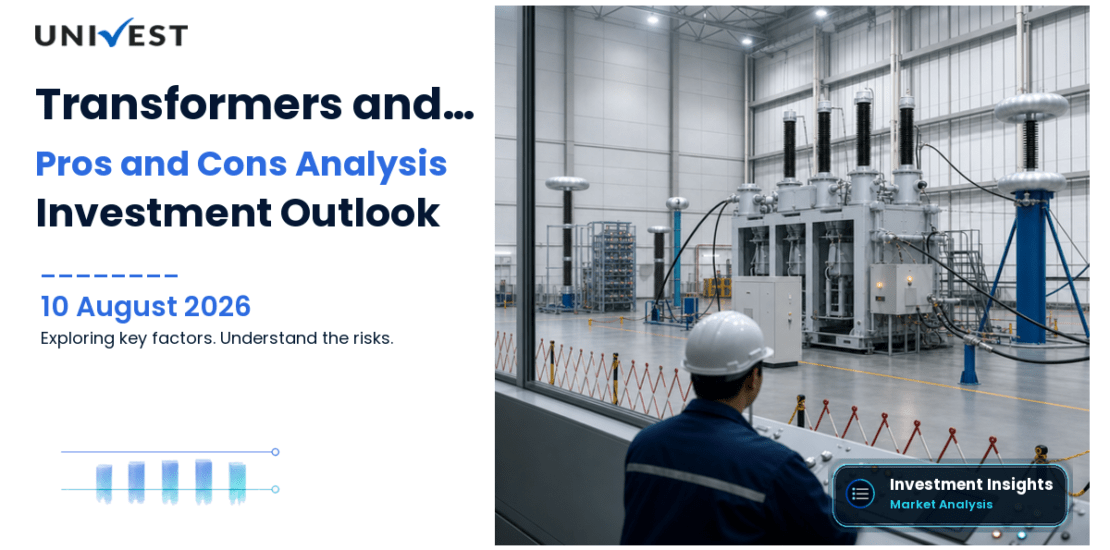
Transformers and Rectifiers India (TRIL) | Power Transformer Manufacturer. MCap ~Rs 5,000 Cr. Ahmedabad-based. HV and EHV power transformers.
What are the pros and cons of investing in Transformers and Rectifiers India share?
The pros of Transformers and Rectifiers India share include power transformer demand from India’s T&D capex boom, specialised EHV transformer capabilities, and renewable energy integration tailwind. Key cons include copper cost sensitivity, utility order cycle dependence, and competition from larger transformer makers.
The pros and cons of Transformers and Rectifiers India share are relevant for investors in India’s power transmission equipment sector. Transformers and Rectifiers India (TRIL) manufactures high-voltage and extra-high-voltage power transformers for transmission utilities and industrial clients, benefiting from India’s massive grid modernisation programme.
Evaluating the pros and cons of Transformers and Rectifiers India share requires understanding the transformer manufacturing business and its dependence on utility order cycles and raw material costs. This five-pros and four-cons analysis provides investors with a balanced view of TRIL.
Click Here – Get Free Investment Predictions
Pros of Investing in Transformers and Rectifiers India Share
1. India T&D Capex Boom Creates Sustained Power Transformer Demand
India’s ongoing investment in transmission network expansion, grid upgradation, and renewable energy integration creates strong demand for power transformers. This government-backed infrastructure spend is a sustained order flow pro of Transformers and Rectifiers India share.
2. Specialised EHV Transformer Capabilities Limit Competition
Manufacturing extra-high-voltage (EHV) transformers for 400kV and above transmission systems requires advanced engineering and testing capabilities. TRIL’s EHV capability limits competition to a small number of qualified manufacturers, which is a technical pro of Transformers and Rectifiers India share.
3. Renewable Energy Grid Integration Drives New Substation Transformer Demand
Solar and wind energy evacuation infrastructure requires new transmission substations with power transformers. Renewable energy integration is a growing demand tailwind and a new market pro of Transformers and Rectifiers India share.
4. Export Opportunities in Emerging Market Grids
TRIL has been pursuing transformer export opportunities in South Asia, Africa, and the Middle East where grid infrastructure is expanding. Export revenue diversification is a geographic pro of Transformers and Rectifiers India share.
5. Strong Order Book Provides Revenue Visibility
With multiple large utility orders in the pipeline, TRIL typically has a substantial order backlog providing revenue visibility over 12-24 months. Order book coverage is a financial predictability pro of Transformers and Rectifiers India share.
Cons of Investing in Transformers and Rectifiers India Share
1. Copper Price Spikes Significantly Impact Transformer Margins
Transformers are highly copper-intensive, and copper price increases can compress gross margins substantially when orders are priced at fixed contract rates. Copper cost sensitivity is the most critical input risk con of Transformers and Rectifiers India share.
2. Intense Competition From BHEL, Siemens, and Global Transformer Makers
TRIL competes with BHEL, Siemens, ABB (Hitachi Energy), and GE Vernova in power transformer tenders. These larger and better-funded competitors are a significant competitive con of Transformers and Rectifiers India share.
3. Revenue Tied to Power Grid Corporation and State Utility Order Cycles
Utility transformer orders from Power Grid Corporation and state transmission utilities are lumpy and budget-dependent. Order timing variability creates uneven revenue recognition and is a financial cycle con of Transformers and Rectifiers India share.
4. Working Capital Intensity From Long Manufacturing Cycles
Power transformer manufacturing involves long production cycles with significant material procurement and work-in-progress. This working capital intensity is an operational con of Transformers and Rectifiers India share.
Analyse Transformers and Rectifiers India Fundamentals Free on the Univest Screener
Transformers and Rectifiers India Stock at a Glance
Transformers and Rectifiers India (NSE: TRIL) has an approximate market capitalisation of Rs 5,000 Cr. The stock has benefited significantly from the India T&D capex re-rating. Monitor quarterly order additions, copper price trends, and Power Grid Corporation capex plans. Verify all data on nseindia.com.
Download the Univest iOS App or Univest Android App to track Transformers and Rectifiers India share price and get daily expert stock recommendations.
Should You Invest in Transformers and Rectifiers India Share?
The pros and cons of Transformers and Rectifiers India share suggest it may appeal to capital goods investors focused on the T&D capex theme who can track copper price cycles. Competitive intensity and copper cost risk are the key cons to evaluate before investing.
Conclusion
The pros and cons of Transformers and Rectifiers India share highlight a specialised power transformer manufacturer riding India’s massive grid capex wave, with EHV capabilities and renewable integration demand, offset by copper cost sensitivity, competitive intensity, and utility order cycle dependency. Evaluate all the pros and cons of Transformers and Rectifiers India share before investing.
Disclaimer: Data and figures in this article are sourced from publicly available information. These may or may not be accurate. Please verify all data with the official NSE (nseindia.com) and BSE (bseindia.com) websites before making any investment decision. Investments in securities are subject to market risk. This content is for educational purposes only and is not investment advice by Univest (SEBI RA INH000013776).
Frequently Asked Questions on Pros and Cons of Investing in Transformers and Rectifiers India Share
What are the pros of Transformers and Rectifiers India share?
Ans. The pros include sustained power transformer demand from India’s T&D capex boom, specialised EHV transformer capability limiting competition, renewable energy grid integration driving new substation demand, export opportunities in emerging market grids, and strong order book providing near-term revenue visibility.
What are the cons of Transformers and Rectifiers India share?
Ans. The cons include copper price spikes compressing margins on fixed-price contracts, intense competition from BHEL, Siemens, and MNC transformer makers, lumpy utility order cycle creating uneven revenue, and working capital intensity from long transformer manufacturing cycles.
What is the NSE ticker for Transformers and Rectifiers India?
Ans. The NSE ticker is TRIL. Transformers and Rectifiers India is listed on NSE and BSE and is an Ahmedabad-based power transformer manufacturer serving Power Grid Corporation, state utilities, and industrial clients across India.
What are EHV transformers and why does TRIL focus on them?
Ans. Extra-High-Voltage (EHV) transformers operate at 400kV and above, requiring specialised design, precision manufacturing, and extensive testing facilities. Very few companies in India qualify to manufacture these, making TRIL’s EHV capability a key competitive differentiation and pro of Transformers and Rectifiers India share.
Is TRIL a good T&D capex investment?
Ans. The pros and cons of Transformers and Rectifiers India share suggest it is a good T&D infrastructure investment for investors tracking India’s grid modernisation. Copper cost risk is the most important variable to monitor alongside order inflows.
What is the MCap of Transformers and Rectifiers India?
Ans. Transformers and Rectifiers India has an approximate market capitalisation of Rs 5,000 Cr. Investors should track Power Grid Corporation order announcements and copper LME prices alongside quarterly results on nseindia.com before investing.