
Ratnamani Metals and Tubes Share: Pros and Cons Every Investor Must Know in 2026
- August 10, 2026
- Posted by: Kunal Singla
- Category: News
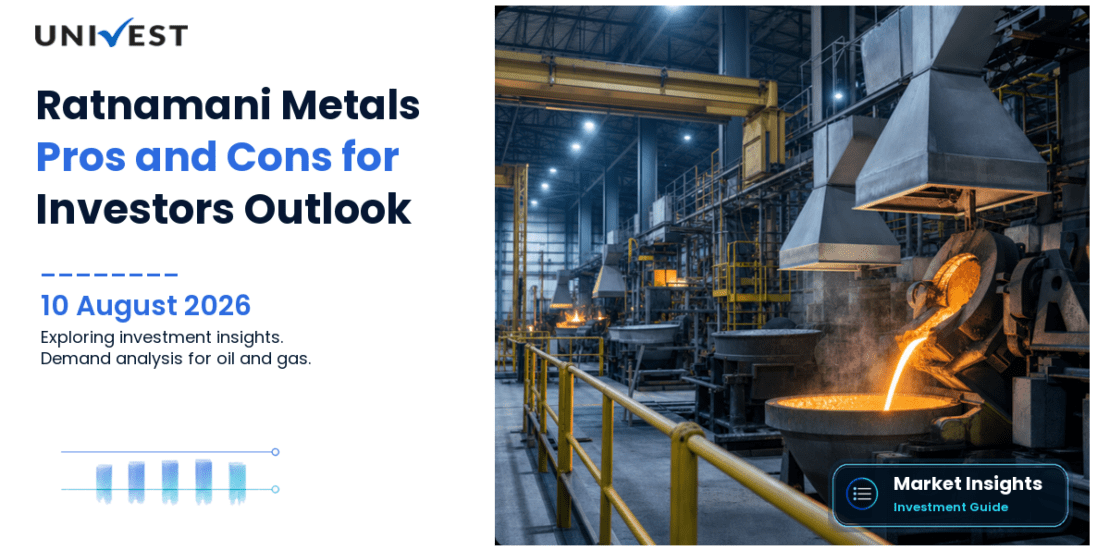
Current Ratnamani Metals and Tubes share price: Ratnamani Metals and Tubes share CMP approx Rs 2,273. 52-week high Rs 3,000, low Rs 1,800. Market Cap Rs 16,621 Cr. P/E ratio 31.10x.
Quick Answer: Ratnamani Metals and Tubes Share
- Ratnamani Metals share at 31.10x PE — India’s largest stainless steel tube manufacturer at below-industry-average PE
- Supplies seamless and welded tubes to Oil and Gas, Power, Chemicals, and Aerospace sectors
- Primary concern: ROE of 11.74% is below quality manufacturing benchmarks despite strong product positioning
Is the Ratnamani Metals and Tubes share and Tubes share a good investment in 2026? This article provides a data-driven analysis of Ratnamani Metals and Tubes share pros and cons — covering business strengths, valuation, growth drivers, and key risks — based on live data from 7 August 2026.
Click Here — Get Free Investment Predictions
About Ratnamani Metals and Tubes
Ratnamani Metals and Tubes share and Tubes Limited (NSE: RATNAMANI) is an Ahmedabad-based manufacturer of stainless steel and carbon steel seamless and welded tubes, pipes, and fittings. India’s largest stainless steel tube manufacturer, it supplies to oil and gas refineries, petrochemical plants, power generation, chemical processing, and aerospace sector clients across India and internationally. Ratnamani operates large tube manufacturing facilities in Gujarat with ASME, API, and international certifications.
Key Financial Snapshot: Ratnamani Metals and Tubes Share
| Parameter | Details |
|---|---|
| Company | Ratnamani Metals and Tubes |
| NSE Symbol | RATNAMANI |
| Sector | Stainless Steel Tubes Manufacturing |
| CMP (Approx) | Rs 2,273 |
| 52-Week High | Rs 3,000 |
| 52-Week Low | Rs 1,800 |
| Market Cap | Rs 16,621 Cr |
| P/E Ratio | 31.10x |
Data approximate. Verify at nseindia.com.
Top 5 Pros of Ratnamani Metals and Tubes Share
1. India’s Largest Stainless Steel Tube Manufacturer — Mission-Critical Product for Industrial Infrastructure
Ratnamani Metals share represents India’s leading manufacturer of industrial tubes — mission-critical components used in oil refinery heat exchangers, petrochemical reactor vessels, power plant boilers, and chemical process equipment. These are safety-critical, specification-intensive products that cannot be substituted without engineering approval — creating high OEM stickiness.
2. Oil and Gas and Petrochemical Sector Demand — India’s Refinery Expansion Driving Volume
India’s planned refinery capacity expansion — IOCL, BPCL, and Reliance expanding capacity — requires significant stainless and carbon steel tube procurement for heat exchangers, process piping, and instrumentation lines. Ratnamani is the preferred domestic supplier for these large tender orders.
3. Below-Industry PE of 31.10x — Relatively Cheap for a Certified Industrial Manufacturer
At 31.10x PE versus the metals and tubes sector average PE of 42.28x, Ratnamani Metals share is priced below sector average — unusual for a market-leading company. This relative discount may reflect ROE concerns but also creates a potential re-rating opportunity.
4. International Certifications — ASME, API, and IBR Enabling Export Sales
Ratnamani’s manufacturing facilities hold ASME (American Society of Mechanical Engineers), API (American Petroleum Institute), and Indian Boiler Regulation (IBR) certifications — enabling export sales to USA, Europe, and Middle East markets where certification is mandatory for industrial tube procurement.
5. Power Sector and Nuclear Application Tubes — High-Margin Specification Products
Ratnamani supplies tubes for power generation boilers and nuclear plant heat exchangers — among the most specification-intensive and highest-margin tube categories. Nuclear tubes require extraordinary quality certifications that few Indian manufacturers can meet.
Key Cons of Ratnamani Metals and Tubes Share
1. ROE of 11.74 Percent Below Manufacturing Quality Benchmark
At 11.74% ROE with debt-to-equity of 0.08x, Ratnamani Metals share is below the 15 to 20 percent quality benchmark for manufacturing companies. This reflects the capital-intensive nature of tube manufacturing (large expensive forging and drawing equipment) and competitive pricing pressure in standard grade tubes.
2. Oil and Gas Customer Concentration — Revenue Tracks Refinery Capex Cycles
Ratnamani’s significant oil and gas exposure means revenue tracks refinery capital expenditure cycles. When oil companies delay expansion projects due to oil price uncertainty, tube procurement deferrals directly impact Ratnamani’s quarterly order inflows.
3. Nickel and Steel Price Volatility — Primary Input Cost Creating Margin Risk
Stainless steel tube manufacturing requires nickel alloy and stainless steel as primary inputs — both globally priced commodities highly sensitive to Chinese demand and nickel mine supply. Nickel price spikes compress Ratnamani’s tube manufacturing margins when customer orders are at fixed prices.
4. Competition From Chinese and Korean Tube Manufacturers on Price
For standard-grade carbon and stainless tubes, Chinese and Korean manufacturers offer significantly lower prices. This forces Ratnamani to compete on quality, certification, and delivery rather than price — limiting volume in commodity tube segments where price is the primary buying criterion.
Use the Univest Screener to Analyse Stocks for Free
Is Ratnamani Metals and Tubes Share a Good Investment in 2026?
Ratnamani Metals and Tubes share analysis summary:
The Ratnamani Metals and Tubes share is India’s leading industrial tube investment. Investors evaluating Ratnamani Metals and Tubes share should consider the oil and gas refinery expansion order cycle as the primary demand driver. The Ratnamani Metals and Tubes share at 31.10x PE trades below sector average, suggesting potential re-rating when ROE recovers. Research Ratnamani Metals and Tubes share on the Univest Screener for detailed metals sector comparison.
Ratnamani Metals share is a quality industrial tube manufacturer at below-sector-average PE. The oil and gas infrastructure demand tailwind and certification-based export access are genuine positives. ROE improvement above 15 percent is needed to justify the current valuation more comfortably.
Key Risks Before Buying Ratnamani Metals and Tubes share
- India refinery expansion project delays reducing oil and gas tube procurement volumes
- Nickel price spike from supply disruption compressing stainless steel tube manufacturing margins
- Chinese tube manufacturers gaining Indian market share with aggressive below-cost pricing
- Nuclear tube contracts being awarded to international suppliers over Ratnamani on specification grounds
Conclusion
The Ratnamani Metals and Tubes share is worth analysing for portfolio inclusion. The Ratnamani Metals and Tubes share offers india’s largest stainless steel tube manufacturer — mission-critical product for industrial infrastructure as its primary investment case. Weigh it against roe of 11.74 percent below manufacturing quality benchmark and the risks above before investing. Use the Univest Screener and consult a SEBI-registered advisor.
Download the Univest iOS App or Univest Android App to track Ratnamani Metals and Tubes share price live.
Key Data: Ratnamani Metals and Tubes Share
Ratnamani Metals and Tubes share CMP: Rs 2,273. Ratnamani Metals and Tubes share PE: 31.10x. Ratnamani Metals and Tubes share MCap: Rs 16,621 Cr. Ratnamani Metals and Tubes share ROE: 11.74%. Ratnamani Metals and Tubes share sector: Stainless Steel. Ratnamani Metals and Tubes share NSE symbol: RATNAMANI.
Disclaimer: Data from publicly available sources. Approximate as of 7 Aug 2026. Verify on nseindia.com and bseindia.com. Not investment advice by Univest (SEBI RA INH000013776).
Frequently Asked Questions — Ratnamani Metals and Tubes Share
What are the main pros of Ratnamani Metals share?
Ans. Ratnamani Metals and Tubes share and tubes share analysis: India’s largest stainless steel tube manufacturer for mission-critical industrial applications, India refinery expansion capex driving tube procurement volumes, below-sector-average PE of 31.10x at 42.28x sector average, ASME and API certifications enabling international export, and nuclear and power tube supply providing high-margin specification products.
What are the risks of Ratnamani Metals share?
Ans. Ratnamani Metals and Tubes share and tubes share analysis: ROE of 11.74% below quality manufacturing benchmarks, oil and gas customer concentration tracking capex cycles, nickel and steel price volatility compressing margins, and Chinese tube manufacturer competition on standard-grade pricing. Monitor quarterly order inflow from refinery clients.
Is Ratnamani Metals share a good investment?
Ans. Ratnamani Metals and Tubes share and tubes share analysis: Quality stainless steel tube manufacturer at below-sector PE. Consider as industrial manufacturing allocation. Consult a SEBI-registered advisor. Not investment advice.
What is the 52-week range of Ratnamani Metals share?
Ans. Ratnamani Metals and Tubes share and tubes share analysis: 52-week high approximately Rs 3,000, low Rs 1,800. Verify at nseindia.com.
What types of tubes does Ratnamani Metals manufacture?
Ans. Ratnamani Metals and Tubes share and tubes share analysis: Ratnamani manufactures: Seamless Tubes (manufactured without a weld seam — highest quality, used in high-pressure oil and gas lines and nuclear plants), Welded Tubes (lower cost, used in heat exchangers and instrumentation), Stainless Steel Tubes (corrosion-resistant, used in chemical processing and food industry), Carbon Steel Tubes (standard industrial use), and Alloy Steel Tubes (high-temperature applications in power plant boilers). Products range from small-bore instrumentation tubes to large-diameter industrial pipes.
Why are stainless steel tubes important for oil refineries?
Ans. Ratnamani Metals and Tubes share and tubes share analysis: Oil refineries require thousands of tube-based heat exchangers to heat, cool, and condense petroleum fractions across the refining process. These heat exchangers use stainless or duplex alloy steel tubes that can withstand corrosive hydrogen sulfide environments, high temperatures, and high pressures without failure. Given that tube failure in a refinery can cause fires, explosions, or toxic releases, refiners procure tubes only from certified manufacturers meeting API, ASME, and NACE (corrosion resistance) standards — a certification barrier that protects Ratnamani’s market position.
